


The Week in Short
SpaceX’s expected record-shattering June IPO will test the public markets’ faith in Elon Musk — and AI. Y Combinator and Ron Conway’s SV Angel show how volume can be a winning strategy in startup investing. Amazon backs Anthropic with another $5 billion and loads of compute. Chinese model-maker DeepSeek is raising outside capital. AngelList offers retail investors a chance to back private startups with debatable terms. Bob Iger returns to investing at Thrive Capital. Meta & Microsoft announce AI-efficiency layoffs and buyouts. Bill Gurley reminds everyone the AI boom is still heavily subsidized by VC cash.
The Main Item
SpaceX Financials Show How Faith in Elon Powers Musk Inc.
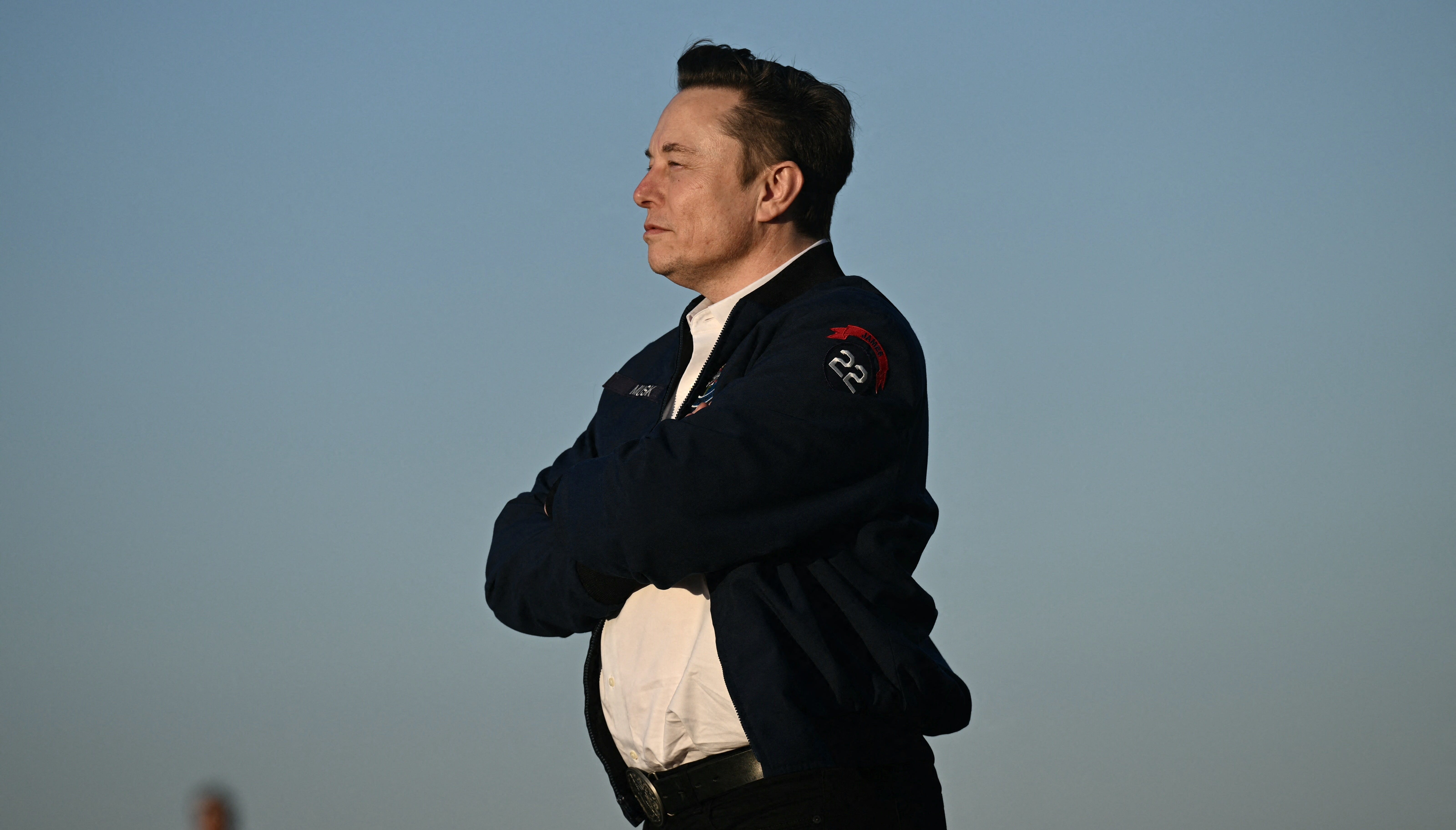
The SpaceX IPO, now expected in June, has become the black hole of technology and finance.
It’s sucking up the attention and the dreams — and soon the dollars — of everyone in its path. Elon Musk’s agreement to buy coding star Cursor for $60 billion sometime down the line, or pay $10 billion, marked only the latest unusual twist.
Data from SpaceX’s confidential S-1 filing has been dribbling out (itself an unusual phenomenon) and it’s all very… unprecedented!
The $75 billion SpaceX aims to raise is an order of magnitude more than what even today would be considered a massive IPO.
The company is a newly constituted combination of the old SpaceX, the old Twitter, and the new xAI, and its financials don’t remotely support the $1.5 trillion to $2 trillion valuation it’s expected to seek. Yet the Elon Musk reality distortion field has been a feature more than a bug for quite some years now (see Tesla). He believes his investors will follow him anywhere, and who’s to say he’s wrong?
Risk factors in an S-1 are doom-and-gloom by design, but SpaceX’s warnings are especially stark. “Yeah, we don’t really know if any of this will work,” would be a fair summary.
It’s widely assumed that Musk will be looking to combine a newly public SpaceX with Tesla. In the meantime, he’s trying to get SpaceX included in major stock market indexes right away. The prospect of the IPO being followed by a steep price decline as private investors cash in their winnings looms over the process.
No one has seen anything like this before.
It’s definitely a banker bonanza, with Morgan Stanley, Goldman Sachs, Bank of America, Citigroup, and JPMorgan Chase all serving as bookrunners and 16 other banks involved in smaller roles.
Here are some key factoids that have emerged from the S-1, mostly via Reuters and The Information:
Musk holds a bit over 40% of the equity ahead of the IPO. Google could see its $900 million SpaceX investment from 2015 turn into more than $100 billion. Founders Fund (Luke Nosek, since departed), Valor Equity Partners (Antonio Gracias), and Fidelity all stand to win big, along with Sequoia Capital (Shaun Maguire), DFJ (Steve Jurvetson, since departed), a16z, Nvidia, and the Qatar Investment Authority.
Merging SpaceX with xAI swung the company to a loss. The combined entity lost $4.94 billion last year on $18.67 billion in revenue, Reuters reported, after heavy investments in xAI infrastructure. In 2024, SpaceX had $791 million in profit on $14.02 billion in revenue. Capex exceeded $20 billion last year, with more than half going to AI development.
Starlink is carrying SpaceX’s revenue. The Information reported that the satellite internet service brought in $11.4 billion in 2025, about 60% of the company’s total, with EBITDA margins of 60%. Rocket launches generated $4.1 billion in revenue, and AI accounted for $3.2 billion.
Insiders are set to retain control. SpaceX will use a dual class structure that gives Class B shareholders — including Musk and a handful of other insiders — ten votes each, while the Class A shares will be worth one vote each. SpaceX will retain its “controlled company” status after going public, which means that it will not require a majority independent board.
Retail investors may not have much board representation, but they will get a seat at the cap table. Musk is allocating 30% of IPO shares to retail, or around three times the norm, with banks assigned to specific pools or “lanes”: Morgan Stanley is handling smaller retail investors, Bank of America is serving family offices and high-net-worth individuals in the US, and UBS will take on these investors abroad, Reuters reported. Around 1,500 retail investors were invited on a roadshow tour of SpaceX’s Starbase facilities in Boca Chica, Texas, once it kicks off in earnest on June 8.
All of this is unfolding as Musk juggles the capital demands of his broader empire. Tesla’s Q1 earnings surprised analysts Wednesday with a projected $25 billion in capex — $5 billion more than predicted, and twice its previous peak.
The question hanging over all of it is whether the market can absorb Musk’s grand ambitions.
Bankers are thrilled that SpaceX could reignite the IPO market more broadly, but they’re pushing to get their own IPOs out ahead of SpaceX — or give it some breathing room and wait until after the summer.
Since buying SpaceX is really buying Musk Inc., there could be a rotation by Elon-stans out of Tesla and into SpaceX — not what Musk is looking for. The Nasdaq is eager to get SpaceX on board, but that could lead to concentration risk.
All of this will no doubt set precedents and influence the timing of the next turn of the wheel: the expected mega IPOs of OpenAI and Anthropic. It will certainly put the durability of the AI boom — or bubble — to the test.
Newcomer Podcast
Amanda Askell on AI Consciousness
Anthropic AI safety researcher Amanda Askell came on the Newcomer podcast to break down one of the most existential conversations in AI to date: can AI systems like Claude become conscious, and if they do, what do we owe them?
Cerebral Valley Show
Have the Vibes Turned Against Anthropic?
On the Cerebral Valley Show this week, Eric, Max, and James debate whether the “vibes” are actually turning against Anthropic or if this is just noise from power users, and later unpack a rough stretch for Sam Altman.
One Big Chart
Accelerators & SV Angel Top List of Seed Investors that Backed $100 Million Companies
Volume can be a very good strategy in the seed investing business.
Dealroom published a list of funds that have written the most seed-stage checks to startups that eventually reached $100 million in revenue, and it’s little surprise that the storied startup accelerator Y Combinator came out on top with 94 companies so far. The accelerator backs around 500 to 600 startups a year nowadays.
Ron Conway’s SV Angel has taken a similar small-check-wide-net approach, with around 50 to 100 new investments a year.
Sequoia Capital stands out as the most successful non-exclusive seed or accelerator fund.

Five Notable Deals
Anthropic, VAST Data, Blue Energy, Reliable Robotics, Omni
Amazon doubles down on its investment into Anthropic with more funding and compute capacity in a week otherwise filled with infrastructure and hardware deals.
Amazon agreed to invest an additional $5 billion into Anthropic, with an option to put up $20 billion more as part of an agreement to build AI infrastructure.
Data infrastructure startup VAST Data raised around $1 billion in Series F funding co-led by Drive Capital and Access Industries. Fidelity, NEA, and Nvidia also participated, among others.
Nuclear power plant startup Blue Energy raised $380 million in combined equity and debt funding led by VXI Capital. Other investors include Engine Ventures, At One Ventures, and Tamarack Global.
Reliable Robotics, which builds autonomous systems for aviation, raised $160 million in a new funding round led by Nimble Partners. Other investors include Eclipse, Lightspeed Venture Partners, Coatue, Pathbreaker Ventures, Island Green Capital, Socium Ventures, AE Ventures, RTX Ventures, Presidio Ventures, UP Partners, KAS Venture Partners, What If Ventures, Calm Ventures, Gaingels, and Mana Ventures.
Omni, an AI analytics platform, raised $120 million in Series C funding led by Iconiq. Other investors include Theory Ventures, First Round Capital, Redpoint Ventures, and GV.