


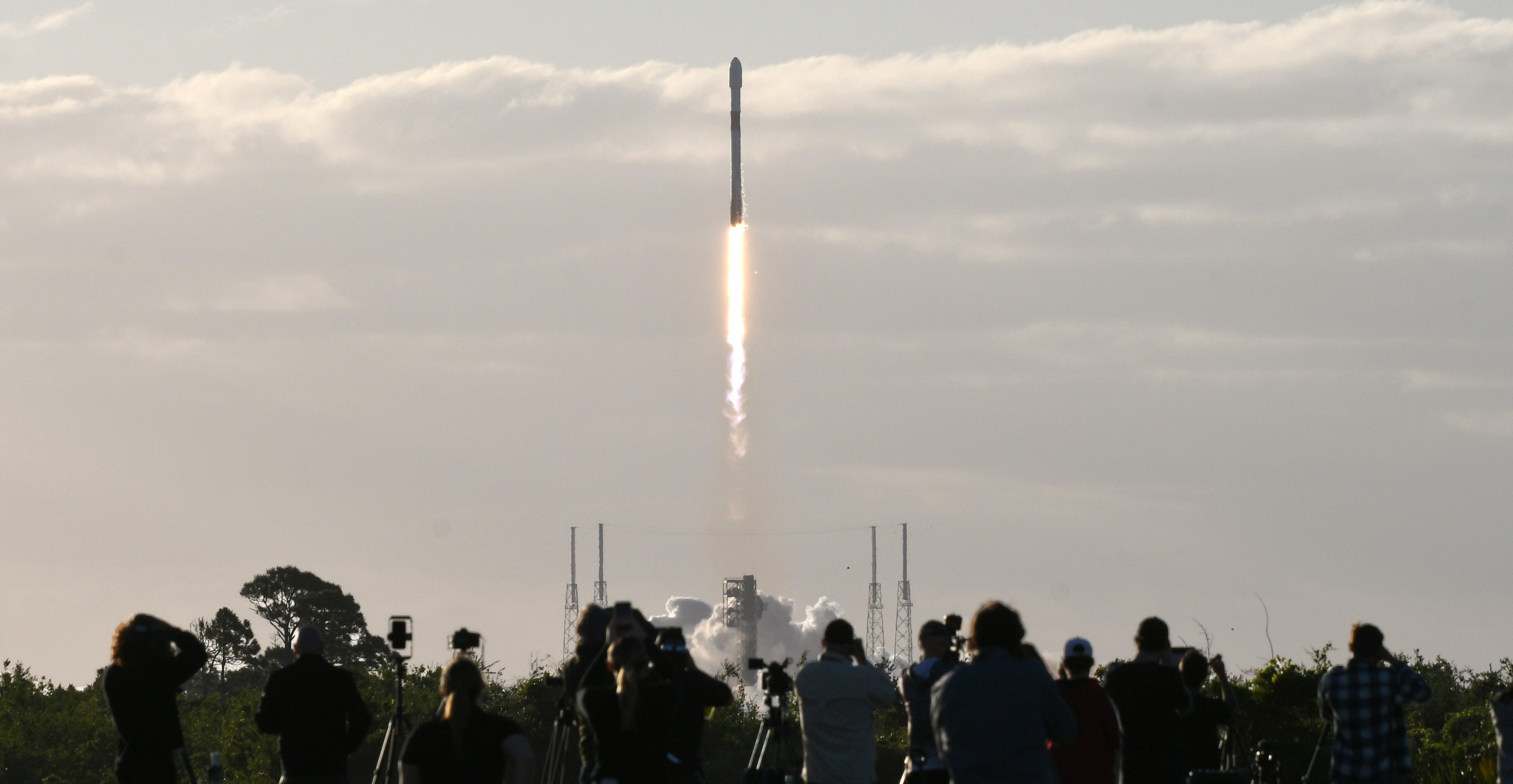
Like all Elon Musk outfits, the SpaceX IPO only makes sense if you look not at what the company is — but what, in its wildest outcomes, it could be.
This is something that’s worked for Musk before, with Tesla. Now, with SpaceX, the story is that the rocket launcher/broadband provider with a bolted-on frontier AI lab is actually destined to be one of the largest data center operators in the universe.
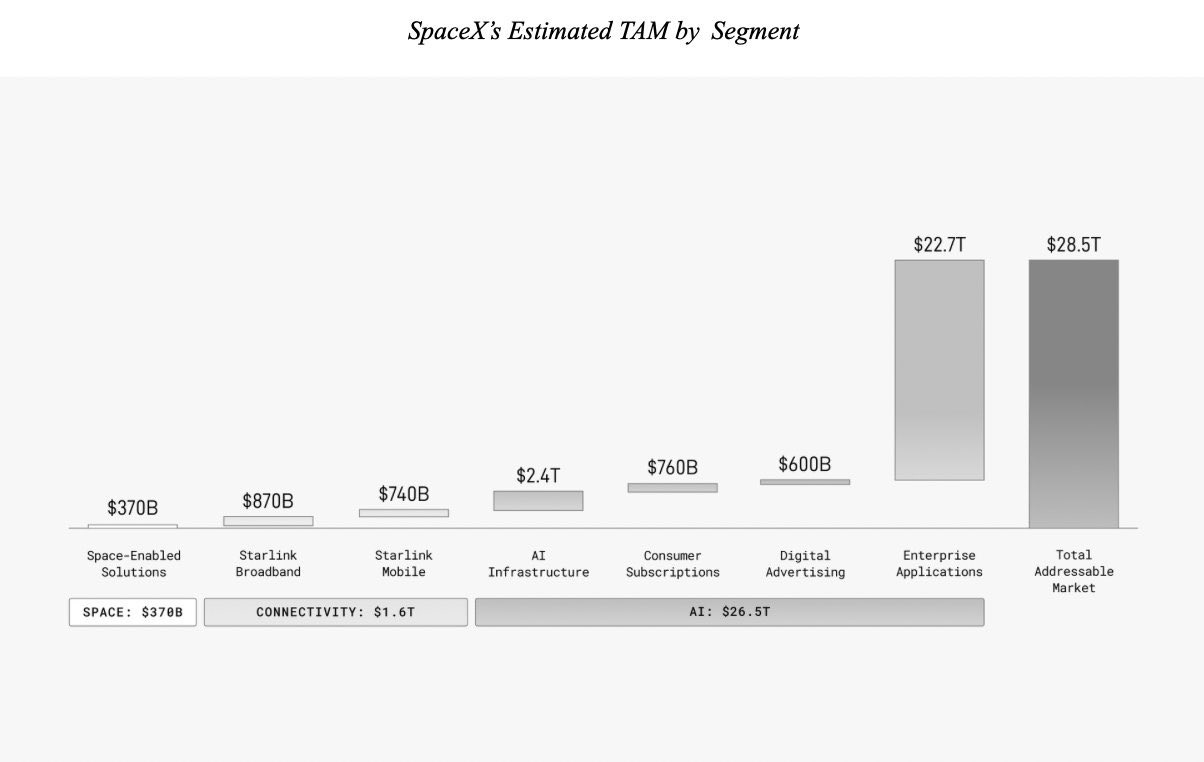
The company makes clear in the IPO prospectus released Thursday where it thinks the puck is headed. While SpaceX pegs its overall addressable market at a gaudy $28.5 trillion, most of that — $26.5 trillion, or roughly 93% — is connected to its AI segment. AI infrastructure accounts for just $2.4 trillion of that; the real prize is $22.7 trillion in enterprise applications. The two are linked: SpaceX is betting that orbital data centers will give it the raw capacity to train frontier models that compete with OpenAI and Anthropic, while driving the cost per token low enough to unlock that larger enterprise market.
This may be one of the largest leaps of faith Musk has ever asked investors to take. Tesla’s narrative may be a stretch, but there are at least some proof points backing it up. For one, thousands of autonomous cars are currently on the road, and the popularity of Waymo proves that people are willing to pay (and pay up) for the service. On the humanoid robot side, yes they face major technical and economic challenges, but they do exist.
But SpaceX’s orbital data centers are, as of yet, a napkin-sketch concept. Its filing admits as much, saying the company won’t even begin deploying these satellites until “as early as 2028.” Anyone familiar with Musk’s timelines knows that expected releases have to be taken lightly — he’s been predicting Tesla’s humanoids are two years away for years now. So it’s anyone’s guess when they’ll actually get these up and orbiting at any scale.