


The Week in Short
The AI race with China had even Jamie Dimon endorsing industrial policy at Tuesday’s Hill & Valley Forum. OpenAI deems Sora, and Disney, a ‘side quest.’ San Jose Mayor Matt Mahan says Dems need to focus on affordability without attacking tech. Defense tech heavyweight Shield AI raises $2 billion, while AI applications earn some investor love. Kleiner Perkins lands $3.5 billion in early and growth stage funds as comeback builds under Mamoon Hamid. Sen. Bernie Sanders files his moonshot AI data center moratorium bill. Two juries find Meta responsible for social media harms.
The Main Item
Industrial Policy Gets New Life as Tech Eyes Government Incentives
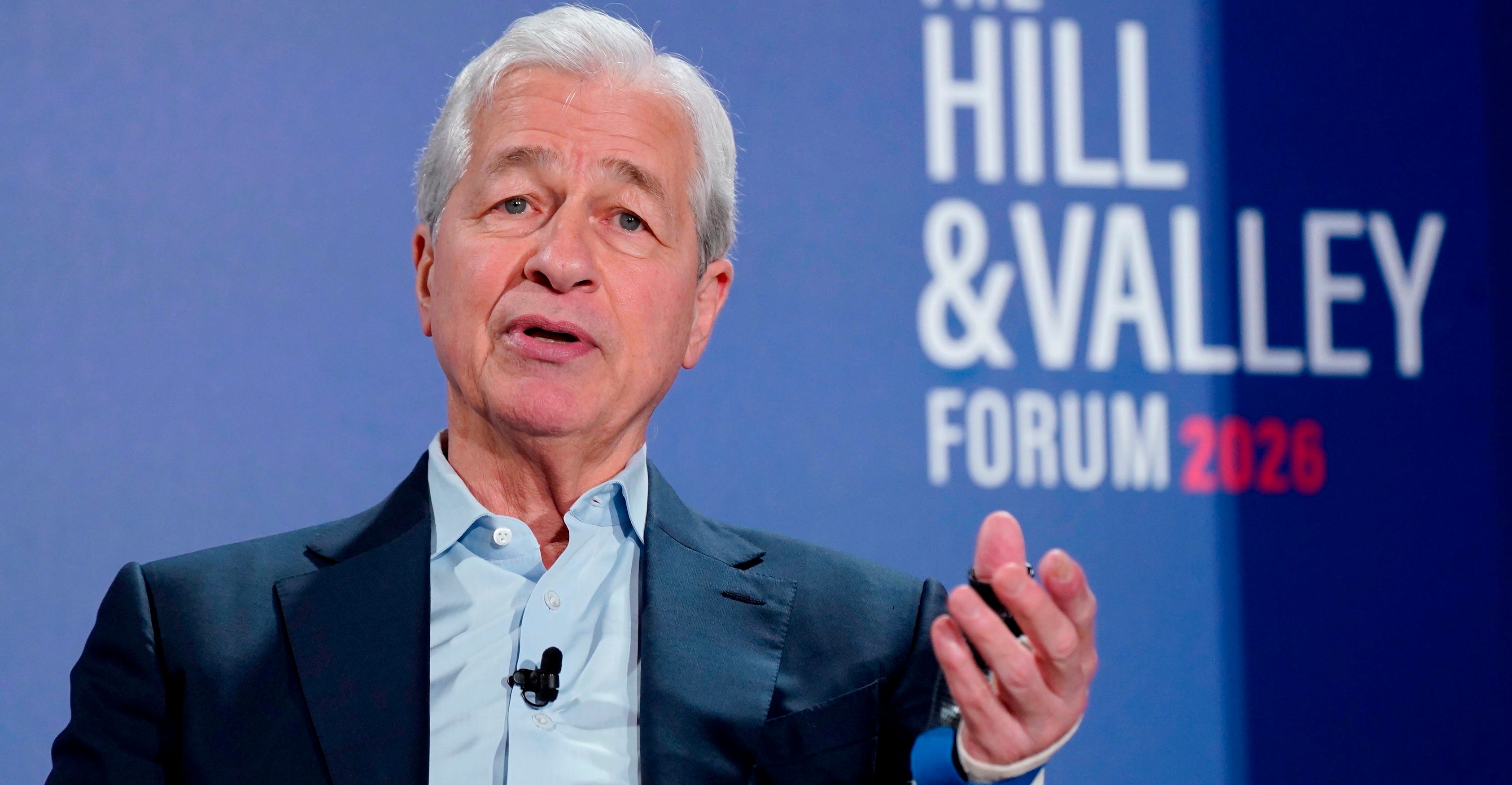
The remarkable transformation of erstwhile free-market capitalists into industrial policy boosters is all but complete, if Tuesday’s Hill & Valley Forum in Washington was any indication.
For at least half a decade, some of the Founders Fund and Andreessen Horowitz investors who’ve embraced the Hill & Valley ethos have been arguing that America needs to shore up its ability to build things.
But they were in a minority. Most business leaders were entrenched in the belief that the government shouldn’t be “picking winners and losers” by directing taxpayer dollars or other incentives to specific companies or technologies.
Now, no less a personage than Jamie Dimon, the honorary chairman of corporate America (pictured), has found himself on board with President Trump’s enthusiasm for deploying government money and power on behalf of the tech industry. The competition with China demands it.
“I think you have to use industrial policy now,” said Dimon, while hedging that he came to that view “reluctantly.”
This new bipartisan consensus holds that onshoring manufacturing and energy production, opening the checkbook for military technology, and building lots of AI data centers are all part of the same mission to strengthen America against its geopolitical rival.
General Catalyst’s Hemant Taneja said it was an urgent matter, noting that only 11% of all factories globally will be in the US by 2030. A subtext of the day was that the federal government should support these endeavors.
There was notable silence on the extraordinary corruption that’s characterized the second Trump presidency — a vivid contrast to the virulent criticism the Hill & Valley cohort directed at President Joe Biden for a host of purported sins. The Iran war was also sparsely discussed.
Founders Fund GP Trae Stephens gave what sounded like a political stump speech on the tech industry’s patriotic duty to America and its values. “When founders start companies, they should ask how does this strengthen the country that is making this success possible?” he declared.
Loyalty to the government, though, apparently depends on favored policies. Stephens said in a fall podcast that tech leaders turned on Biden when they realized that “all of this time and effort and money that they put into courting the Democratic establishment didn’t really give them the connectivity to drive any of the change that they wanted to see.”
Another big theme at the conference was worry about Americans’ bad attitude towards artificial intelligence, as evidenced by AI polling worse than ICE.
Vinod Khosla predicted that “the single biggest issue in the 2028 election will be fear of AI.” Sen. Mark Warner warned that youth unemployment could hit 30 to 35 percent within four years and economic anxiety at that scale would fuel populism from both the left and right. That could threaten the entire AI transition. “If we don’t figure this out we’re going to get screwed,” he said.
There wasn’t much reflection on how the industry’s actions, or mounting disapproval of their ally in the White House, might be affecting public perceptions.
Anthropic CEO Dario Amodei, who consistently cites AI risks including mass job-losses, was backhand blamed for spreading doom about AI. Yet at the very same time he was being subtly dragged by his rivals, US District Judge Rita F. Lin in San Francisco was observing that the government’s designation of Anthropic as a “supply chain risk” looked like punishment for disagreeing with the White House on AI regulation.
Late Thursday, Lin blocked the supply chain designation, ruling that the administration’s actions amounted to “classic illegal First Amendment retaliation.” Anthropic, she wrote, was being knee-capped for the crime of “asking annoying questions.”
Perhaps the public doesn’t support the Hill & Valley agenda in part because they see it as self-serving, and don’t appreciate the “connectivity” with an unpopular administration whose affections are based on fealty and money. That’s not just a messaging problem.
AI in Hollywood
With Sora’s Demise, OpenAI Priorities Are Clear
The team at OpenAI that built Sora supposedly named the AI video generation tool after the Japanese word for “Sky.” It was meant to signify its limitless potential.
Naming something after the sky and thinking of it as limitless potential feels like a bad idea — mythologically speaking. Sora flew for about a year before OpenAI melted the wings. The sun in this case was app chief Fidji Simo’s crusade against so-called “side quests.”
In the wreckage there are some important lessons about OpenAI and Hollywood’s relationship with AI video.
OpenAI is now a couple weeks into its hard pivot into being an enterprise oriented company, jettisoning projects like ballast from a hot air balloon. The company is locked in a major battle with Anthropic to win the agentic coding and API businesses — allocating GPUs to a resource-hogging, essentially revenue-free product like Sora is a luxury the company cannot afford.
We were skeptical of Sora 2’s early success last fall. Despite its quick rise to the top of the app charts, it was a gimmick, and in the purest sense, true slop. It failed as a social media tool even though OpenAI execs were already thinking out loud of ways to monetize creators.
In truth, Sora was just another in the long line of short-lived image generation fads out of OpenAI. Remember when everyone was using Dall-E to rip off the “Studio Ghibli” aesthetic for their family photos? Nobody does.
Well, that’s not entirely true. There’s one group of people who remember the Studio Ghibli moment, and Sora as well: Hollywood. It was only last December that OpenAI signed a deal with Disney to incorporate their characters into Sora in exchange for a $1 billion “investment” in the company (really it was just a warrant for Disney to buy up $1 billion in OpenAI shares).
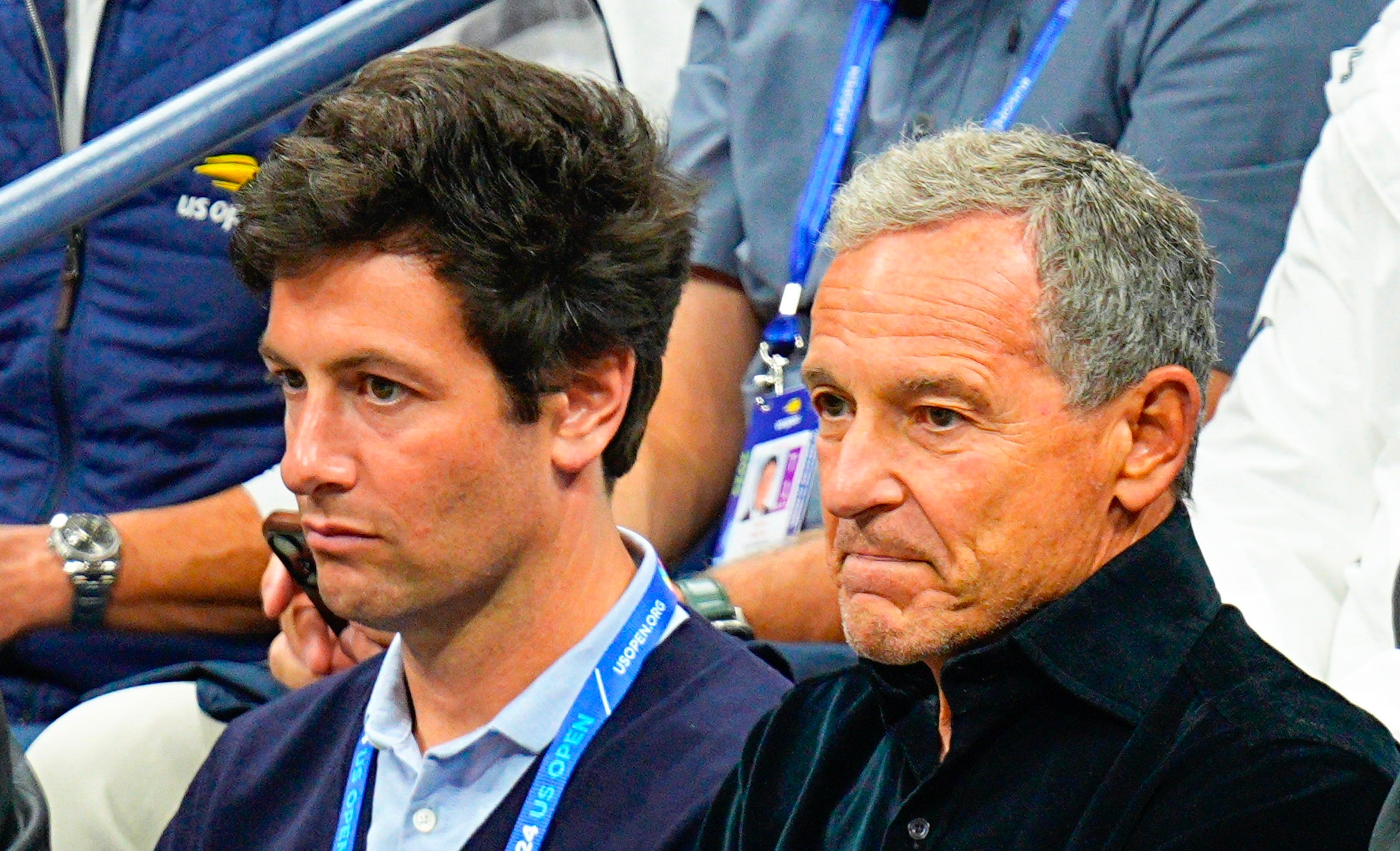
When OpenAI killed Sora, Disney was given a less than 24 hours’ notice, Reuters reported. That deal is a blemish on former CEO Bob Iger’s record — he was a venture partner at Thrive, which is a major OpenAI shareholder. (Iger is pictured above with Thrive’s Josh Kushner.) It’s yet another example of how little people in Silicon Valley think about their counterparts down south. The tradition of disrespect goes back decades.
We were skeptical OpenAI ever cared about Hollywood. A company whose core technology rides on a cavalier interpretation of IP rights is not going to fit well into the temperamental and litigious entertainment industry. Also, OpenAI employees never really knew what they wanted with Sora. One executive at a movie studio told us he’d get different answers from different OpenAI employees — one would say it was all for robotics; another would say it was a consumer AI video play; and another would say it was indeed an effort to infiltrate the moviemaking process.
But this hardly foretells the death of AI’s integration into movies. Sora was not a top-of-the-line video model. Google’s VEO, Runway ML, Luma Labs, and increasingly the Chinese-made Seedance are better. Even if the film purists hate it, Hollywood is embracing AI at an accelerating rate.
OpenAI is just not in the mix. The company and Hollywood have gone their separate ways, with little love lost between the two. Brynn Mooser, the CEO of AI studio Asteria, gave us the epitaph: “Sora 2 was AI slop. Thank God it’s gone.”
Newcomer Podcast
Matt Mahan on Fixing California, Fighting Trump & Running for Governor
Matt Mahan is the Mayor of San Jose and is running a long-shot campaign for Governor of California.
He is also rare among prominent Democrats in his willingness to say out loud that California’s failure to fix housing, homelessness, and energy costs has handed the MAGA movement its best ammunition.
Eric sat down with Mahan to get into why California has spent $20 billion on high speed rail and delivered nothing, why the billionaire wealth tax will backfire, and how San Jose reduced homelessness by a third without raising taxes.
One Big Chart
AI Startups are Divided on How Best to Price Products
The question for many startups on how to price AI tools has been a big one. Unlike SaaS, running AI for several thousand users can quickly run down margins, so the old playbook of selling subscriptions doesn’t neatly apply.
Still, few AI companies are switching to a fully usage-based pricing structure, data in ICONIQ’s 2026 State of Go-To-Market report shows. The exception is companies whose core product is proprietary AI model development, though even 16% of these companies are using only usage-based pricing, while 50% have a hybrid approach.
AI application companies are also predominately hybrid, but more have stuck with the traditional subscription model.
