


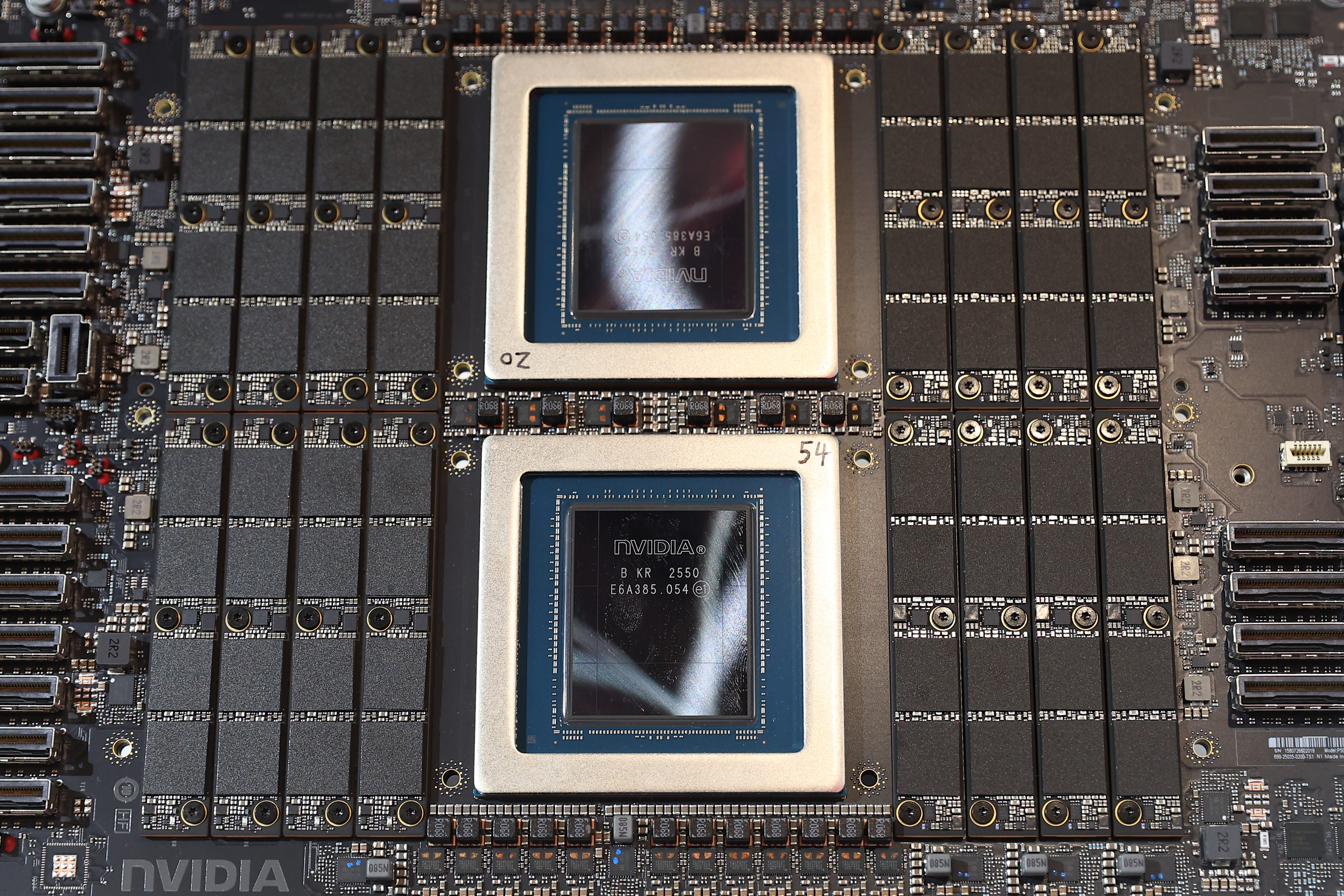
Benchmark has won out in a hot competition to lead a new funding round for early-stage chip startup Tendrils Compute, according to multiple people familiar with the matter.
Sources say that the company is already discussing a fast follow-up raise that would potentially value the firm at more than $1 billion. Neither round has previously been reported. Benchmark declined to comment.
The Tendrils deal is the latest in a wave of big VC bets on chips, marking the revival of the sector that gave Silicon Valley its name but has long been out of favor as investors focused on software and networking. Startups are betting that specialized chips for specific workloads will have an important place in the infrastructure build-out — in contrast to previous generations of the technology that were dominated by a small handful of chipmakers.
The small Tendrils team, which is led by Nils Cremer and based in Cambridge in the U.K., is betting that general-purpose chips based on an obscure graph-based computing model called interaction nets will let it scale without the coordination and cost problems associated with contemporary multi-core CPUs. As AI agents complete multiple steps of inference and tool calls, CPU speed may become a new bottleneck.
Subscribe to Newcomer to see our market map of hot chip alternatives.
Benchmark has been on the leading edge of the new chip enthusiasm. Back in 2016, Eric Vishria co-led the Series A round in Cerebras Systems and saw a 20.5x multiple on its check when the company went public this spring. It was Benchmark’s first hardware investment in 10 years, and Vishria almost skipped the meeting, he told TechCrunch.
That success, combined with the relentless demand for AI compute, has convinced VCs that there are plenty of returns to go around on chip startups. In August, Etched, which builds specialized chips and racks for AI inference, doubled its valuation to $21 billion off a fresh $700 million fundraise. Fellow inference-focused chipmaker Fractile is in talks to raise at a $6.5 billion valuation after landing a deal to supply chips to Anthropic. OLIX, a U.K.-based inference chip startup, raised $312 million at a $3.3 billion valuation back in August. Two other companies each announced nine-figure capital hauls in September: inference chip startup Euclyd and Delos Data, which builds software and networking equipment to help information travel more quickly around data centers. Just this morning, Volantis Semiconductors raised $88 million from Lachy Groom and Abstract Ventures for another inference-focused chip.
“They have a massive tailwind from capex build-out,” said Darian Shirazi, managing partner at Gradient. “They probably will all do well.”
Still, chips are notoriously capital-intensive and cyclical, with long development timelines, and are not for the faint of heart. Cerebras, for example, went public in May at $185 and has traded as high as $386, but now sits close to its offering price.
VCs have been getting creative to share the risk and cost of chip development. Coatue and startup chipmaker MatX have been in talks to form a joint venture to the tune of billions of dollars to help the company finance memory purchases and capacity with manufacturers, per The Information.
We’ve heard from VCs that the emerging chip ecosystem is noisy and difficult to parse. We’ve created a market map that helps clarify the state of play, focusing on three different types of chip startups.
You can also get insight on how investors are thinking about this sector from Newcomer’s VC Sentiment Report — a brand-new, quarterly study featuring quantitative questions and no-BS quotes from 25 anonymous VCs representing many of the best-known firms. Check it out here.