


The Week in Short
The Cerebras IPO shows the power of the AI investing wave as Benchmark, Foundation, and Eclipse score. Sam Altman looks set to prevail in the Elon Musk lawsuit — but maybe not in the bigger battle for AI leadership. Anthropic tops OpenAI in enterprise usage for the first time, per Ramp. Anduril scores $5 billion. Isomorphic Labs brings in $2.1 billion. Recursive Superintelligence debuts, with $650 million. The Gallup poll shows Americans’ deep dislike of data centers. Anthropic is cracking down on the secondary trade and considering new financing that could triple its valuation. Newcomer made an error on the billionaire tax, and its backers pounced.
The Main Item
Cerebras IPO Is a Big Win for Benchmark, Foundation Capital, Eclipse — & OpenAI
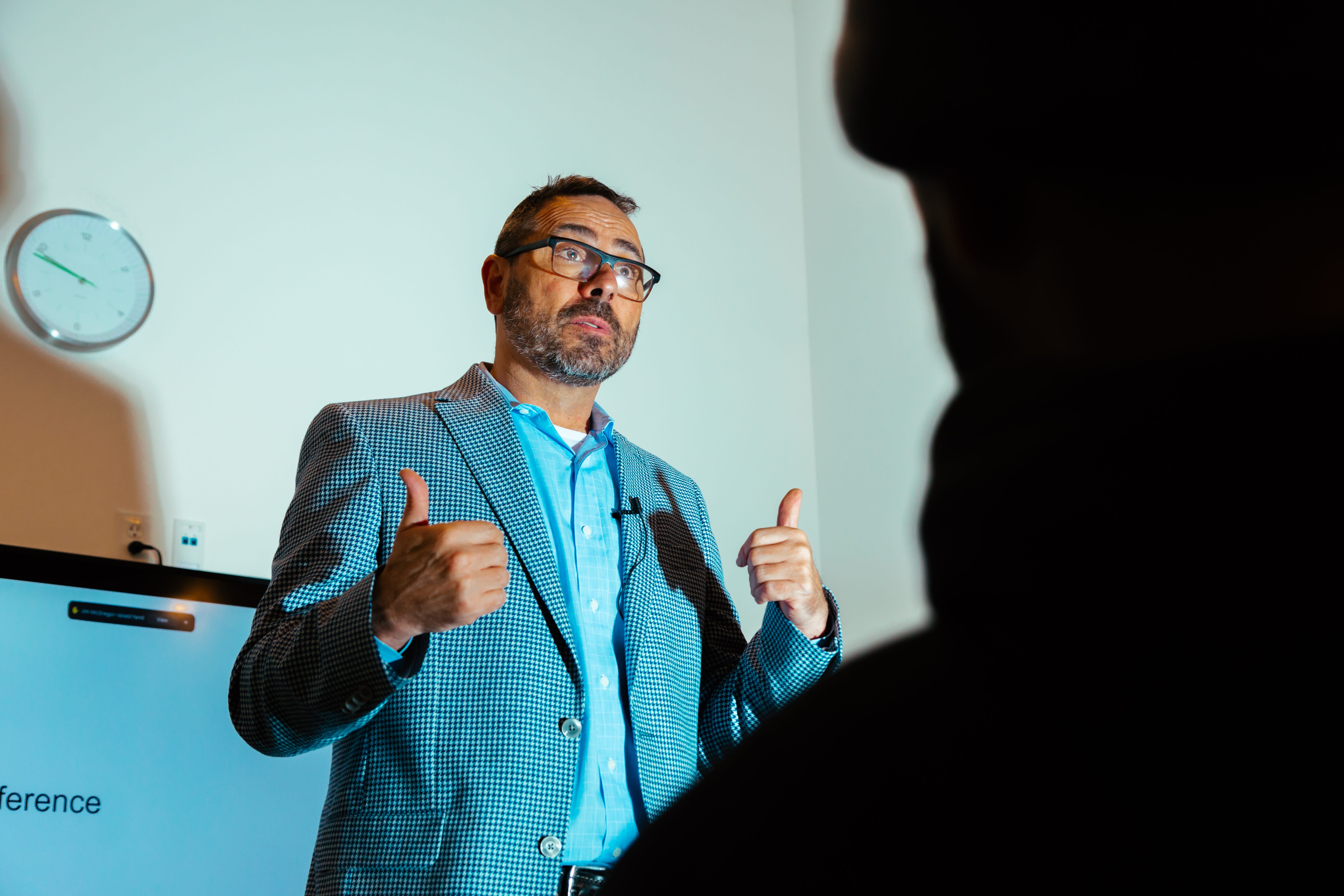
Chip startups have been a tough sell for VCs in recent years, but Andrew Feldman (pictured) didn’t have a lot of trouble winning early backing for Cerebras, the AI chip startup that thrilled the markets in its public debut Thursday.
Together with Gary Lauterbach, Michael James, Sean Lie, and Jean-Philippe Fricker, Feldman had built the server company SeaMicro in 2007 and sold it to AMD after five years for $334 million. There were plenty of VCs eager to hear about their next thing.
Yet it was still a long and complicated road between the first discussions among Feldman, Lauterbach, and Steve Vassallo of Foundation Capital back in 2014 and Thursday’s sensational IPO. A few highlights from one of the first pure AI plays to go public:
Cerebras raised $5.55 billion after opening at $185, the high end of its range, and reached $385 before closing at $311, for a market value of $95 billion.
Feldman and CTO Lie are set to enter the billionaires club. Big VC winners include Eric Vishria and Benchmark (stake valued at $5.5 billion based on Thursday’s close), Vassallo and Foundation Capital ($4.8 billion), and Lior Susan and Eclipse ($4.2 billion). All three VCs remain on the board.
Foundation Capital had a particularly impressive return on its investment: the firm put in only $36.8 million, which at Thursday closing price would be a 129x multiple.
OpenAI could add its name to the winner list too. The foundation model lab struck a partnership with Cerebras in late 2025 in which the ChatGPT maker would eventually get 11% of Cerebras after buying billions of dollars in compute capacity over the next few years. Sam Altman and Greg Brockman also made off with a net worth boost, after the Musk-Altman trial revealed Altman owned around 89,000 shares and Brockman had about 78,000. Their positions were worth roughly $27.6 million and $24 million by Thursday’s close.
Cerebras had tried to go public before only to pull back, and raised multiple billion-dollar funding rounds. Coatue and Altimeter were big growth investors but no longer make the 5% stakeholder cut off for the 2026 S-1. The growth-stage firm Alpha Wave Global has a 6.5% stake and Fidelity has the largest percentage stake outside of the top executives at around 11%.
The debut came on a day when the Nasdaq and S&P indexes both registered fresh all-time highs, driven largely by unprecedented gains in a chip sector that’s been super-charged by AI. Notably, Nvidia is up 20% in the last 10 days, even though Cerebras is a direct competitor.
Cerebras’s powerful debut speaks to the very frothy markets and the insatiable investor appetite for AI ahead of the anticipated debuts of SpaceX later this year and Anthropic and OpenAI in 2027.
Feldman is reaping the rewards of having seen the AI revolution coming more than a decade ago. He’d observed advances in machine learning, and anticipated the need for new types of chips that were optimized for running the so-called neural network algorithms that are at the heart of machine learning and generative AI.
Vassallo of Foundation Capital helped to incubate the idea in its early days. Meanwhile, at Benchmark, GP Peter Fenton had been business school classmates with Feldman at Stanford, and he forwarded his colleague Vishria the pitch for a new kind of chip architecture. Benchmark wasn’t known for hardware investments, but Vishria had also been following the impressive developments in machine learning and saw the potential in a purpose-built chip.
Over at the emerging venture firm Eclipse, Susan had followed the Cerebras team since his fellow GP Pierre Lamond, the legendary veteran of Fairchild Semiconductor, had backed them at SeaMicro. Benchmark and Foundation put in $10 million each into Cerebras’ first institutional round, with Eclipse throwing down around $6.5 million alongside various angels. Lamond initially held the Cerebras board seat until Susan took it up in 2023.
The company at first worked out of Foundation’s offices, with Feldman often hosting brisket barbecues for the team in their old backyard.
As the cliché goes, though, hardware is hard. There were many hardware and software redesigns and lots of continuous grinding. Not many people saw the use in these dinner-plate-sized wafer chips as machine learning remained a niche. After landing Argonne National Labs and GSK as customers, it wound up relying heavily on UAE-based G42 for contracts. That dependence helped scotch its first try at an IPO.
But as AI usage picked up post-ChatGPT and AI inference became the name of the game, Cerebras’ wafer chips proved more efficient than Nvidia’s GPUs for the task. As more labs needed these inference-specific chips to power existing user queries rather than just training runs, demand shot through the roof.
Susan at Eclipse helped Cerebras land G42, and later Amazon and OpenAI as big customers for Cerebras, which helped the firm slightly diversify its customer base after the cancelled 2024 IPO. Its customer concentration remains high, but if the pop on Thursday is any indication, investors will take any exposure to AI they can get at the moment, risks be damned.
Trial of the Century
Sam Altman Is Poised for a Legal Win. Bret Taylor Could Reap the Rewards.
Both sides gave their closing arguments in the Musk-Altman trial on Thursday, bringing us to the final moment in what has been a revealing, embittered, and often highly entertaining three week affair. When OpenAI’s lead attorney Bill Savitt wrapped up his case, Josh Achiam, the company’s court representative, smiled and shook Sam Altman’s hand.
The jury will begin their deliberations on Monday considering Elon Musk’s claims that Altman and Greg Brockman and OpenAI breached the company’s nonprofit mission by essentially converting to a for profit entity — and unjustly enriched themselves in doing so. The jury’s decision is advisory though, with the final verdict and potential remedies in the hands of U.S. District Judge Yvonne Gonzalez Rogers.
There’ll be plenty to pick over when the decision comes in, but as a courtside observer it’s hard not to see OpenAI as a heavy favorite. Going in, Musk’s side had a steep mountain to climb, and the defense has presented a lot of text evidence showing Musk was actively engaged in many of the discussions over creating the for-profit arm, which complicates the "breach" narrative. The betting markets agree, giving him only a one in three chance of winning.
But even if OpenAI prevails, there may be long-term damage to the company. Musk’s side effectively highlighted the persistent and widespread doubts about Altman’s credibility, and retreated his firing by the board in 2023. In closing arguments, Musk’s lead attorney noted that five different people who’d testified in the case said he wasn’t a trustworthy person (Helen Toner, Tasha McCauley, Ilya Sutskever, Mira Murati, and Musk).
Meanwhile Altman’s conflicts of interest have been enough to warrant a letter from the House Oversight Committee demanding more information.
Maybe he’ll be able to skate past all this and see OpenAI through an IPO and beyond. But an intriguing alternative quietly popped up during the trial when company chairman Bret Taylor testified.
He was calm, confident, and well informed. He parried Musk’s lawyers’ questions about Altman’s firing and why he chose to join the board (he wanted to help save the company) and its conversion into a public benefit corporation (all above board and approved by state officials).
Taylor’s name has been casually bandied about as a potential OpenAI CEO (the Wall Street Journal suggested this in a recent story), but this was the first time it seemed real.
It makes sense on paper. He’s an experienced enterprise sales chief, working as co-CEO of Salesforce before splitting with Marc Benioff. His AI software startup Sierra has built a promising business selling AI solutions for customer service uses. The guy knows chaos, having served as chairman of Twitter when Musk launched his takeover.
OpenAI is increasingly an enterprise oriented organization competing with Anthropic to sell its coding agents to companies. Also OpenAI has a history of bringing executives in from the board to be top executives: Fidji Simo was on its board before coming on as product chief.
This wouldn’t be seamless. Sierra just announced a new funding round valuing it at $15 billion and these investors would want to be made whole and then some if Taylor bounced. But those sorts of deals are standard fare these days.
There’s a lot that can change with the verdict and any number of other events in the coming months. Altman might be just fine. But if OpenAI ever feels the need to sub him out, Taylor passed the test.
Newcomer Podcast
Vinod Khosla on the End of Jobs and the Future of Capitalism & Aron D'Souza on Taking Down Gawker
It’s a two-for-one week on the Newcomer Podcast!
First up, legendary venture capitalist Vinod Khosla came on the podcast to share his thoughts on why AI could eliminate the need for traditional jobs, how capitalism may evolve in an AI-driven world, and why future generations may no longer need careers purely for survival.
Next up, Eric sat down with Aron Ping D’Souza, the Oxford law student who first pitched Peter Thiel on the idea that would eventually bankrupt Gawker. Today, D’Souza is building the Enhanced Games, a PED-legal sporting competition, and Objection AI, a Thiel-backed platform designed to investigate news articles line by line using former CIA and FBI agents.