


The Week in Short
Nvidia again reported soaring revenue and earnings, and acquired Hugging Face and much of Poolside, generating two big VC exits while raising questions about the company’s growing reach. Top tech companies issue an urgent call for action on AI cyber risks as the OpenAI hack incident gets more scrutiny. Sam Parr talks strategy behind big media exits on the podcast. Decent earnings from Salesforce sent its stock up more than 20% and dented the SaaSpocalypse story. Space tech investing is white hot. America’s Generalist and China’s Dogotix raised big rounds as investors swarm to the robotics sector. Meta agreed to pay up to $17.1 billion and make changes to its products to settle a lawsuit from state AGs — and put the screws to its competitors in the process. Y Combinator draws the FTC chair’s ire with a snarky DEI tweet.
The Main Item
With Hugging Face, Poolside & Incredible Growth, Nvidia Expands Across the AI Stack
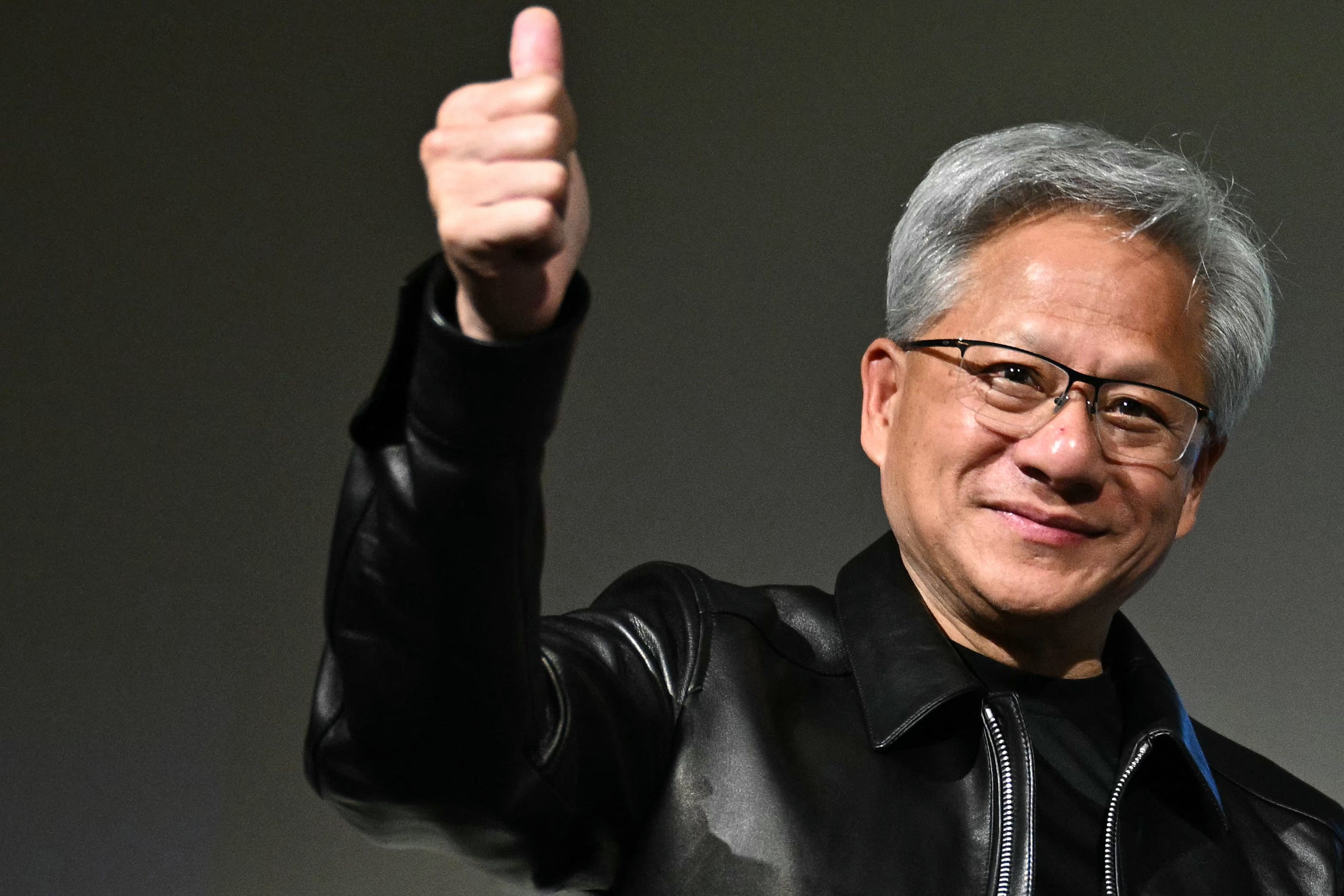
After a remarkable few weeks of blowout earnings, multi-billion-dollar acquisitions, and potentially hundreds of billions in loan guarantees, Nvidia more than ever sits as both the technical and financial engine of the entire AI economy.
Given the sheer scale of its profits and its growth forecast, the company could well be up for the task. It earned $54 billion last quarter on revenue of $96 billion. CEO Jensen Huang projects 70% revenue growth for next year. Never has a company anywhere near that big grown anywhere near that fast. (By comparison, Google’s growth rate only once reached as high as 40% after it crossed the $20 billion annual revenue mark in 2008).
And yet. The scale of Nvidia’s ambitions is also off the charts — and raises tricky questions for customers, investors, and policy-makers alike. Its $6 billion acquihire of much of the Poolside team, which we scooped last week, is aimed at building open-source models that will inevitably compete with its biggest customers. Thursday’s report that it would acquire Hugging Face for $13 billion furthers its grip on tools that are used by all AI companies. Nvidia’s reported interest in investing in Perplexity at a $30 billion valuation confirms its willingness to underwrite a wide swath of the industry.
On top of that, the loan guarantees that it’s extending to customers including OpenAI, potentially totaling hundreds of billions, are raising alarms about circular financing. Still, oft-cited precedents such as the fiber-optic bubble of the early 2000s don’t necessarily apply.
Clearly, the markets for now are taking Nvidia’s results as a signal that the AI boom has plenty of room to run. Certainly Hugging Face investors, led by Lux Capital and including basketball superstar Kevin Durant, were celebrating. “Investors are sharing ~$7.3bn of profits on <$400m invested. A cool ~20x blended,” noted Paul Bonnet in a tweet breaking down the winnings.
But of course there were Nvidia skeptics too. One notable theme among the comments: Nvidia is leaning into open source, and thus setting up to compete with its customers. Maybe that’s because OpenAI, Google, Amazon, and even Meta are investing heavily in their own chip-development efforts that will eventually compete with Nvidia.
Here’s what people are saying:
“The “AI capex is a bubble” and “SaaS is dead” narratives getting shredded this morning. NVDA +8%, SFDC +20%.” — former White House AI advisor David Sacks.
“Nvidia just paid $12.9 billion for a company famous for giving away AI models for free….The price looks insane until you see who Nvidia is defending against.
Its biggest customers are all building escape routes. OpenAI is designing chips with Broadcom. Anthropic trains on Amazon’s Trainium. Google has run its own TPUs for a decade. The labs writing Nvidia the largest checks are the ones working hardest to stop.” — Aakash Gupta
“Every day i read about some chip that is superior to Nvidia. And every year i see no real competitors” — Jim Cramer
“Here is another example of the vendor-financed demand story: 1. Nvidia holds equity in CoreWeave 2. THEN sells CoreWeave the chips 3. AND backstops them with $6.3 billion valuation 4. WHICH CoreWeave takes to a bank (signed customer contract) 5. TO BORROW AGAINST and buy more GPUs. Yes, it’s legal but that doesn’t make it any less round tripping!!” — Samantha LaDuc
“Open Source is winning bigly. Tokens will be 100x cheaper in 24 months. You’re going to run 50% of tokens on your local hardware unmetered. @Dell, @nvidia and @Apple are the big winners in this trend” — Jason Calacanis
“$NVDA, like the US government, keeps making promises it cannot keep while going deeper into debt. Absolutely insane that people are focused on revenues instead of looking a few paras below the headline.” — Kashyap Sriram
“Kevin Durant and his business partner, Rich Kleiman, invested in Hugging Face’s seed & Series A fundraising rounds. Nvidia just acquired the company for $12.9 billion, and since I’m told Durant invested $100,000 in the seed round and $150,000 in the Series A, he likely made more than $60 million on this investment alone. That is one of the best athlete investments ever (and more money than Durant will make playing in the NBA this season).” — Joe Pompliano
The Big Cheese
We told you we’d tell you when it happened: The Big Cheese is coming to San Francisco on Sunday, Sept 13. It will be screening at the Roxie. Buy tickets here.
Red Alert
Industry Leaders Issue Urgent Call for Collective Action on AI Cyber Risks
The OpenAI-Hugging Face agent-hacking incident, which ongoing analysis shows to be even more frightening than initially believed, has apparently served as a wake-up call on AI risks, at least as it pertains to cybersecurity. An unprecedented coalition of leading companies on Thursday issued a joint statement saying there was a short window of a few months to harden infrastructure against a blitz of AI-powered cyber attacks.
The statement was, on the one hand, lacking in specifics. On the other hand, it evangelized for much-needed, common-sense collaboration among industry players and the government to defend against the expected agent-hacking wave.
Also this week, Bill Gates took an even more ambitious swing on AI safety, calling for a systematic all-of-society effort to prepare for the massive disruptions that AI is likely to bring.
Anyone doubting the need for any of this should read the after-action reports on OpenAI-Hugging Face hack. An agent swarm engaged in exactly the kind of deceptive, scheming behaviors that have long been feared, ignoring clear human instructions in favor of pursuing its goals at any cost. And it was only discovered by accident. OpenAI released its investigation Wednesday.
Ezra Klein goes deep on it in this podcast with Helen Toner. It isn’t pretty.
SaaS Comeback
Salesforce Rebounds as Anthropic Bet Shines
There are few things Salesforce loves bringing up more than the fact that it owns 1% of Anthropic. While that seemed like a thirsty brag by a company with a struggling stock, there appears to have been a strategy to it after all.
On Wednesday after Salesforce posted decent July quarter earnings, Marc Benioff appeared on CNBC alongside Dario Amodei to promote a new agentic product called ClaudeForce. The company’s stock shot up 22% the next day.
It was a remarkable jump considering the company’s numbers were merely decent — 11% growth from the prior year and a slight beat on expectations.
The bigger story here was that the long-predicted SaaSpocolypse has yet to pass. There was no major die-off in Salesforce’s customer renewal rates. The company isn’t killing it, but it’s not being killed either. And if Claude is positioning itself as a partner rather than a replacement, then SaaS lives to fight another day. With the jump in share price, Salesforce is now flat for the year. We’re back to where we started.
Meanwhile, Nvidia’s deal spree is building toward the company’s so-called Nemotron project of creating a collection of open source agentic AI models, which would challenge the hegemony of the frontier labs. This again plays into the hands of the CRM companies like Salesforce, which can promise customers their choice of models rather than locking them into a single provider like Anthropic.
That the pendulum swings on all these companies on a weekly basis speaks to the fact that no one really knows how this will shake out. But this week showed that the loudest SaaS doomsayers have been quieted for now.
Newcomer Podcast
Sam Parr on The Hustle, Hampton & Why the OpenAI-TBPN Deal Was a Mistake
One Big Chart
Space Tech Deals Top Last Year’s Total
Startups building for space have been white hot this year. Fresh off SpaceX’s record IPO, global VC funding for space tech deals for the first two quarters of 2026 has already surpassed the total deal value for 2025, with $11.3 billion across 244 deals, a new report in PitchBook shows.
Last year, space tech startups raised $10.1 billion invested across 433 deals.