


The Week in Short
A16z sets a new bar for VC fundraising. Polymarket & Kalshi are having a moment as prediction markets go mainstream. Startup funding rebounds to 2021 levels. XAI brings in $20 billion amid fury over sexualized images. LMArena lands a big Series A. Niko Bonatsos of General Catalyst and Ravi Gupta of Sequoia announce new gigs. Replit founder Amjad Masad said his criticism of Israel led to him being shunned in Silicon Valley — until the company took off.
The Main Item
A16z Surpasses Rivals, Stresses America-First Agenda with Massive New Fundraise
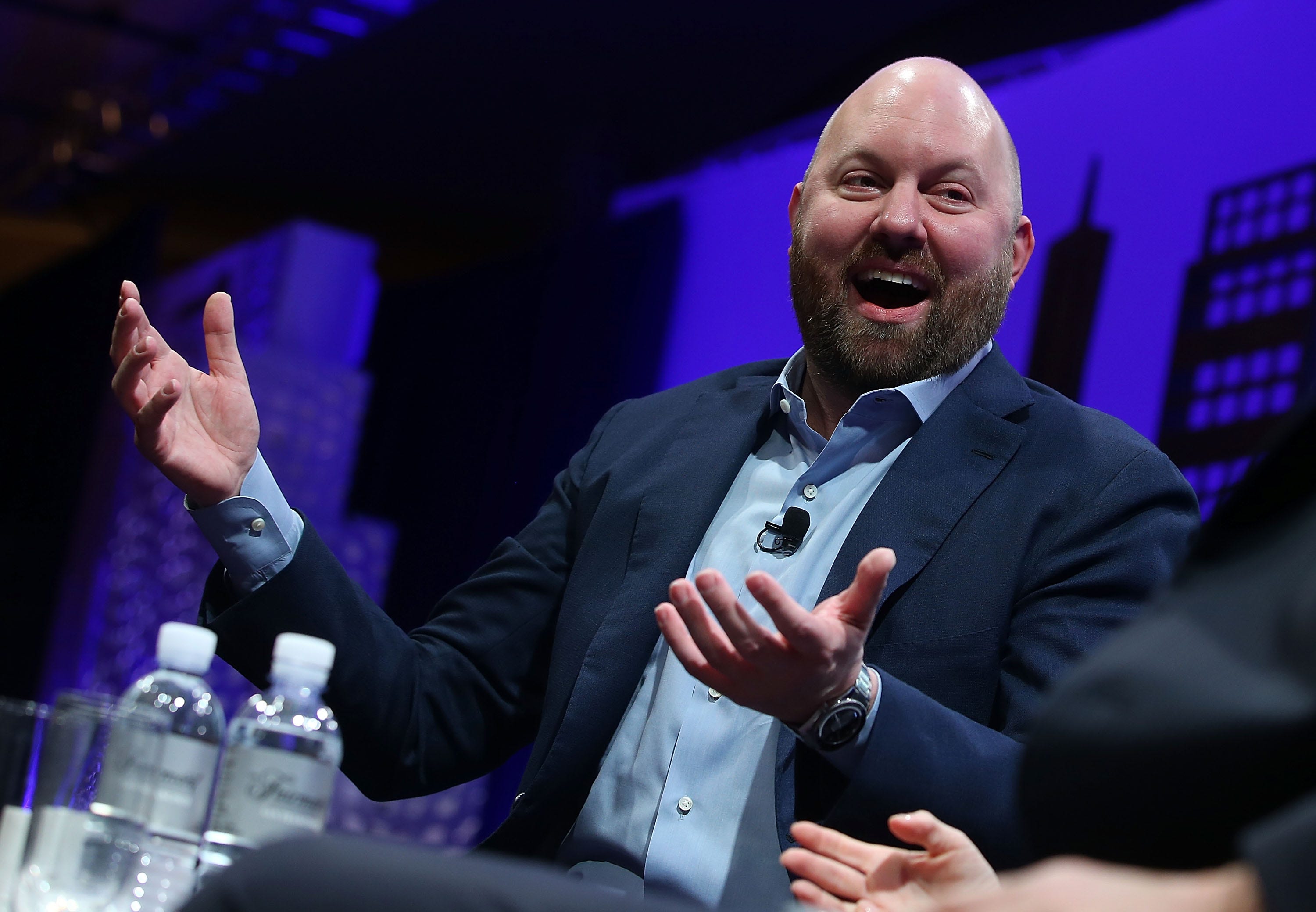
It’s the megafund to end all megafunds.
A16z announced it had closed on just over $15 billion in new funds this morning, the largest VC fundraising haul in the history of Silicon Valley.
It dwarfs Lux Capital’s $1.5 billion new fund announced earlier this week — which in any other moment would be viewed as massive capital commitment — as well as Lightspeed’s $9 billion from the end of last year. Only Softbank’s Vision Fund of a decade ago has topped a16z’s numbers.
It sometimes feels as though the firm is eating the venture capital industry, to twist Marc Andreessen’s most famous quote.
As with the firm’s 2024 fundraise, the mountain of capital will be distributed across a handful of different funds:
$6.75 billion for a new growth fund
$1.7 billion for Apps Fund 2
$1.7 billion for Infrastructure Fund 2
$1.176 billion for American Dynamism Fund 2
$700 million for Bio+Healthcare Fund 5
$3 billion for other venture strategies
Alex Rampell still shores up the Apps fund, while David Ulevitch is the senior GP for American Dynamism. Martin Casado helms the infrastructure fund, David George runs Growth, and Vineeta Agarwala remains prominent in bio/ healthcare after former leader Vijay Pande stepped back last summer.
The crypto fund led by Chris Dixon notably did not get a specific call-out this year, nor did the games fund that’s been managed by Andrew Chen, though the firm’s different focus areas don’t always raise on the same cycle.
Reuters reported last spring that the firm was seeking $20 billion in new funds.
Reading Ben Horowitz’s announcement, it’s abundantly clear that an America-first ethos is permeating the firm’s investment strategy.
“As the American leader in Venture Capital, the fate of new technology in the United States rests partly on our shoulders,” he writes. “America,” “American,” and “United States” appear 16 times in the blog post.
Chinese technological development serves as the obvious foil and the catalyst for such an arms race. Horowitz’s missive shows how the upper echelons of the tech industry are seeking alignment with American leadership.
For a firm that likes to boast about disrupting old power structures, a16z’s latest move looks surprisingly familiar: rally around the flag, raise the biggest war chest, and dare anyone to match it.
Betting on Gambling
Predictions Markets Surge Amid Questions About Insider Trading
In a fitting manifestation of the YOLO spirit now dominating Wall Street and Silicon Valley, prediction markets are on a roll.
The two dominant players, Polymarket and Kalshi, both closed funding rounds late last year that valued them at $9 billion and $11 billion, respectively, and both are quickly building ties to mainstream financial and media firms.
Polymarket, which now counts the NYSE’s parent as its biggest investor, this week announced a deal with Wall Street Journal parent Dow Jones to make its market data available on the financial publishers’ platforms. Kalshi last year inked similar arrangements with CNN and CNBC.
The pair also continue to build buzz off of geo-political betting, as we saw this week with the mystery individual who won $400,000 with timely bets that Venezuelan President Nicolás Maduro would be out by the end of the month.
There are plenty of other companies stalking the opportunity, including Coinbase, Crypto.com, and Robinhood, the pioneer of gamified stock and crypto trading. There are also a host of early-stage startups with a variety of angles on the opportunity.
The “event contracts” offered by prediction markets are usually based on binary, yes or no answers to a question (i.e. will Donald Trump win the election?), with odds fluctuating up to the time of the event, based on what the crowd thinks. It’s a futures contract, and proponents of the concept point to their potential utility in hedging risk.
But the big financial prize is sports betting: so far, the platforms have been able to end-run state gambling regulations, to the great chagrin of the big sports books.
It’s not always obvious what triggers a quick break-out for a particular start-up category, but in this case it’s quite clear that it’s the deregulatory spirit of the Trump Administration. Polymarket had been banned from taking US bets, but no more. The Commodities Futures Trading Commission, which is supposed to be the regulator, is barely functioning.
The flip side, of course, is that rarely has regulatory risk loomed so large for companies and their investors. Donald Trump Jr. is an investor in Polymarket and an advisor, and is also an advisor to Kalshi — clearly a hedge against the President changing his tune on their industry. There are also numerous lawsuits working their way through the courts that could change the equation.
Both Kalshi and Polymarket frame their businesses as akin to stock exchanges. “People can make money on what they know,” Kalshi co-founder Luana Lopes Lara told CBS News late last year. “Everyone is an expert on something.”
As Matt Levine points out, a new contract from Polymarket offering bets on housing prices could be used by a homeowner to hedge against a possible drop in price. With the endless number of things one could potentially wager on, it’s not hard to see the potential.
It’s also not hard to see the problems. In the context of elections, where it’s often helpful to be seen as the likely winner, backers of a candidate can pour money in to improve the odds.
Betting on elections was routine in the days before polling, and odds were even printed in major newspapers like the New York Times. But it faded after World War II amid a regulatory crackdown, driven by concerns about manipulating outcomes — the same concerns led the CFTC under the Biden Administration to bar election bets in the US, though a court in 2024 threw out the restrictions.
That’s only the beginning of the thorny issues. Contracts based on real-world events that could be made to happen are highly problematic. Definitions of what counts as a “winner” can be a quagmire too, as we just saw when Polymarket declined to pay out bets on an “invasion” of Venezuela, arguing that the snatch-and-grab of Maduro didn’t qualify.
Perhaps the toughest issue is the question of “insider” trading. Kalshi insists it already bans insider trading, and has thrown its support behind legislation introduced this week by Rep. Ritchie Torres of New York that would ban government officials from prediction markets.
The issue is all but certain to arise again, however, when prices shift mysteriously before the outcome of an event. Monitoring price movements on prediction platforms for clues about the future is already a business in itself, and another opportunity for investors to capitalize on the growing love — and government permission — for unfettered gambling.
One Big Chart
VC Funding Rebounds to Best Year Since 2021
PitchBook’s latest report shows the VC industry kicking off 2026 with a lot of momentum, at least when it comes to the amount of money put into deals.
US venture funding had its best year since 2021 with just over $339 billion in deal value for 2025 — up sharply from $213 billion last year. The number of estimated overall deals was up as well, at just over 16,000.