


The Week in Short
Google taps the equity markets for $85 billion in fresh funding to pay for its data center buildout, a week before the IPO of Elon Musk’s mega-corp. SpaceX will seek $75 billion at a $1.75 trillion valuation, though it won’t get special treatment from the S&P index after all. Gigascale founding partner Mike Schroepfer says his new $250 million hardware-focused fund is keen on climate startups. Median TVPI for venture funds is finally on the rise. Ramp leads a jam-packed fundraising week. President Trump’s new AI executive order is friendlier to the industry. Benchmark raises a $2 billion growth fund, its first. The data center buildout is facing some major delays. A16z hires a Biden administration veteran as its head of global affairs. Airbnb’s Brian Chesky launches an AI lab.
The Main Item
Google’s Big Equity Raise Is a Nod to Risk
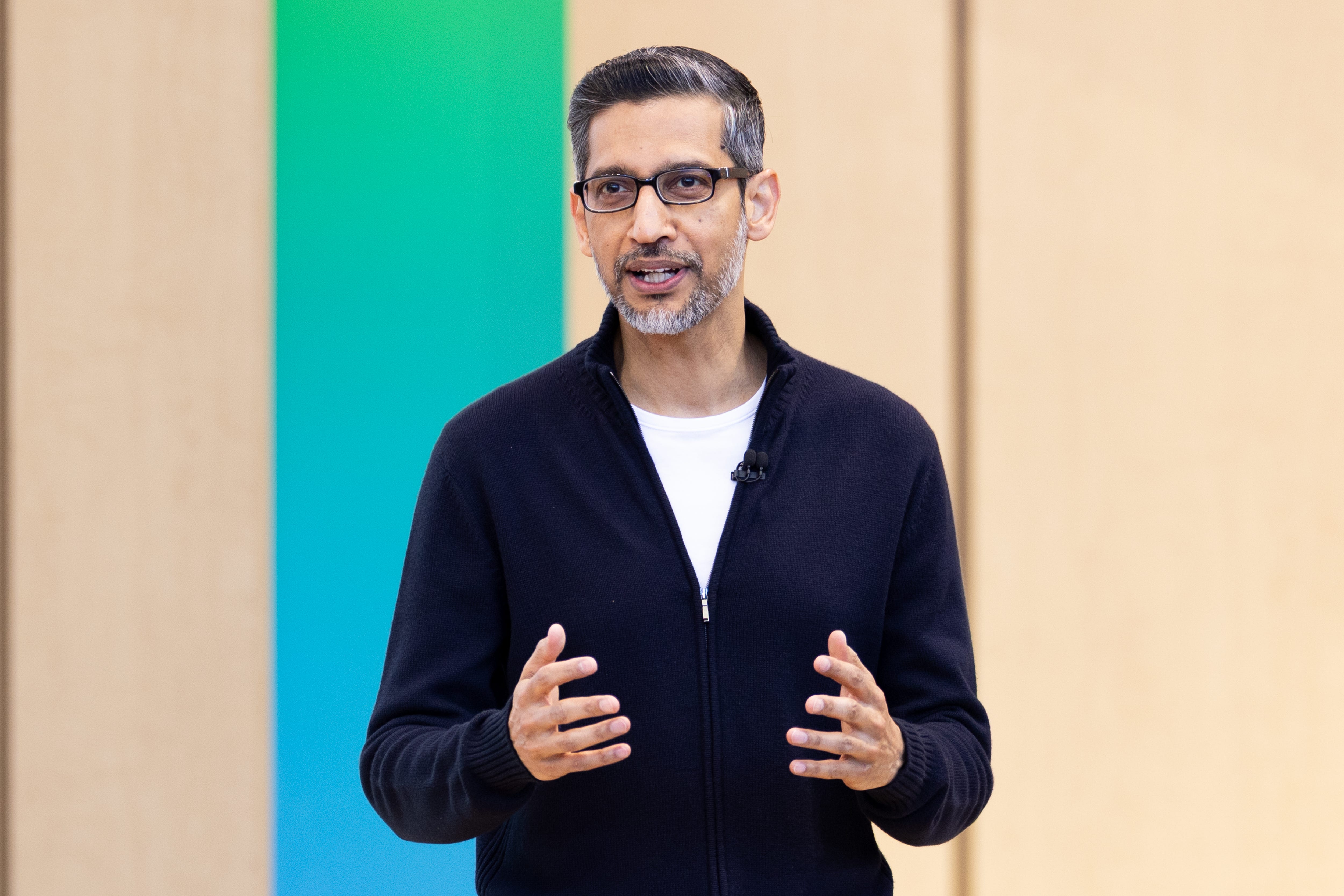
You know it’s a strange time in the money world when a huge and highly profitable company that’s been buying back its own shares for years suddenly issues $80 billion in new equity — and it’s not even one of the bigger stories of the moment.
That company, of course, is Google parent Alphabet, which needs more cash for its data center build-out. If it was trying to steal a little thunder from Elon Musk with a number bigger than the $75 billion that SpaceX is aiming to raise in its IPO next week, well, that didn’t really work. Indeed, hardly anyone noticed when Google bumped its number to almost $85 billion later in the week.
But the fundraise does underscore the exceptional leverage Google enjoys as AI rivals OpenAI and Anthropic — as well as frenemy SpaceX — move towards the public markets.
Like Microsoft, Google has had to weigh AI data center investments against the needs of its existing cloud computing business, which after years of being out-competed by AWS and Microsoft is finally growing fast and taking share. Until now, it’s been happy to finance its ever-growing capital needs with debt.
But the company appears to have decided it needs to be more aggressive on AI data centers as it pushes its TPU chips and steadily expands its offerings. As a MoffettNathanson report notes, the company appears to be gearing up for “an aggressive land grab in the AI arms race.”
The fact that it’s raising equity is a nod to the risks. As James Mackintosh at the Journal points out, if AI turned out to be over-hyped, a debt-fueled expansion could leave the company vulnerable to a cash squeeze. That scenario becomes even more worrisome if Google’s recent AI overhaul of its core search service ends up hurting its cash-gushing ad business; Parmy Olson at Bloomberg says the changes are already causing a “freak-out” among marketers.
With equity, on the other hand, shareholders would absorb the pain with little direct impact on the company. And if you’re so big that you can sell $85 billion in stock without tanking your share price, why not?
Pundits are mixed on whether the public equity markets can absorb the ~ $300 billion in capital that SpaceX, OpenAI, Anthropic, and Google are expected to seek combined over the next six months or year. Barron’s is skeptical. Axios says it’s no big deal.
If anyone comes up short, though, it’s not likely to be Google.
New Fund Launch
Gigascale Capital Raises $250 Million & Will Go Hard at Climate Investing
Climate tech investing has fallen out of fashion, with many clean tech funds pivoting to national security or energy independence to fit the vibes of the moment.
But Mike Schroepfer isn’t shying away from positioning his first $250 million fund for Gigascale Capital, announced earlier this week, as one dedicated to funding hardware startups that are the most climate-friendly alternative to their incumbents.
“I look for the companies where the thesis is co-aligned,” said Schroepfer. That means teams who are building hardware that is “better, faster, cheaper, but also cleaner as a result.”
As the former CTO of Meta, Schroepfer oversaw several of the tech giant’s hardware pushes, including Meta Ray Bans and Oculus headsets post-acquisition, so he knows how “hard” hardware development can be.
Though this is Gigascale’s first fund, the portfolio already counts 25 investments made before first close using capital from Schroepfer’s family office — a major LP in the fund. Some of the buzzier companies are Radiant Nuclear, whose recent funding round Newcomer scooped last December, and the chip maker Fractile, which raised a $220 million Series B last month.
Another portfolio company Heron Power, which is developing solid state power transformers, recently landed a large deal with LG to connect its energy networks to LG’s industrial battery tech.
Neither of these companies fit the traditional climate tech definition, but both address energy consumption in ways that will have a significant impact on emissions. Fractile’s chips are particularly energy efficient, while Radiant’s modular micro-nuclear reactors generate clean power for industrial centers.
While there’s no hard and fast rule on check size, Gigascale plans to invest in early institutional rounds and bets will average $1 million to $10 million.