


The Week in Short
Our look at 13 polls shows that Americans are scared of AI taking their jobs, and don’t trust our own government to regulate it. Kara Swisher enters the Newcomer Podcast studio to skewer Silicon Valley. Electric truck maker Slate Auto leads an otherwise slow week for funding rounds. Jensen Huang spars with Dwarkesh over Nvidia’s chip sales to China. Accel raises a fresh $5 billion in funds, while Sequoia rakes in $7 billion for late-stage bets. Google is back in talks with the Pentagon to license its AI models. Anthropic’s Mythos could spur governments to regulate AI.
Plus, we get ready for the Cerebral Valley Voice Summit on May 6.
The Main Item
Recent Polls Show Job Fears & Lack of Oversight Driving Negative Views of AI
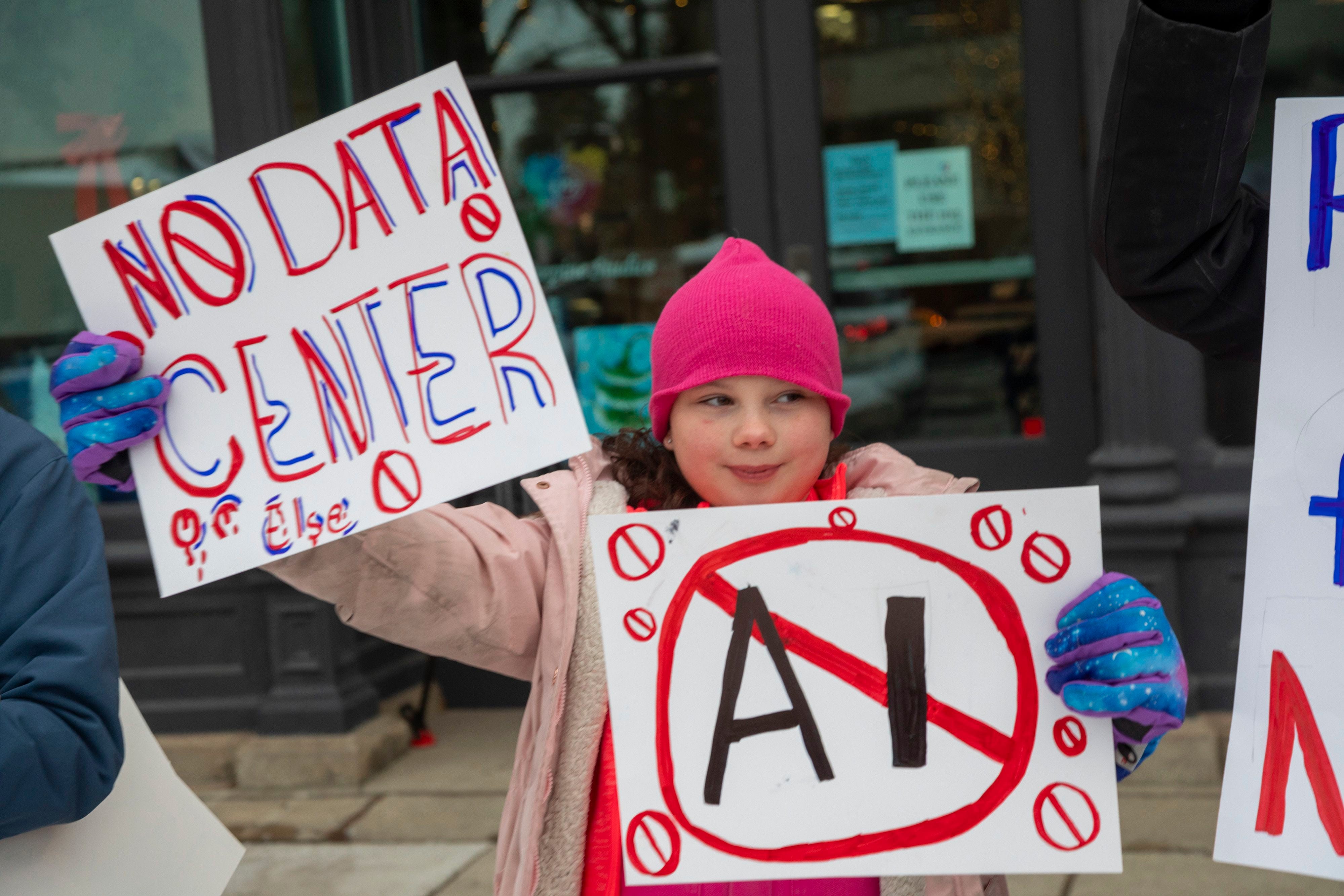
It’s no secret that AI is not as popular with the American public as it is in Silicon Valley. Facing a political backlash, industry leaders are now fretting about whether they’ve painted the wrong picture. In light of that, we thought it worth a close look at what public opinion polling says — and doesn’t say — about attitudes towards AI.
We reviewed 13 polls published since September of last year. All but two are from well-known mainstream polling organizations, and all but one have sample sizes of 1,000 or more.
Our four biggest takeaways from the data:
The biggest fear about AI, hands down, is that it will take people’s jobs. Americans are using AI more in the workplace, but both blue- and white-collar workers are wary of its impact on their livelihoods and careers.
There is a strong appetite for AI regulation. The demand for oversight is broad and bipartisan, although Democrats are increasingly concerned about AI while Republicans are trending slightly towards less concern, per Pew Research polling from 2020 to 2025.
Most Americans don’t have strong opinions on the data center buildout in general, even as local opposition mounts to the data center next door. Democrats are more hostile to data center construction in their communities than Republicans, according to Politico data.
“AI experts” (defined as AI conference presenters or authors with technical or applied AI expertise) are neutral to positive about AI tools and much less concerned about job destruction compared to the average American. Only 39% of AI experts think AI adoption will bring about fewer jobs, compared to 64% of Americans.
A complete list of the polls we used, with links to their data, is at the bottom of this post. We found the polling from Quinnipiac, Pew Research Center, YouGov, Politico, and Stanford/ Ipsos to be the most interesting and have a further breakdown below.
Quinnipiac, March 2026: White-Collar and Blue-Collar Workers Alike Think AI Will Decrease Available Jobs. Gen Z Is the Most Pessimistic
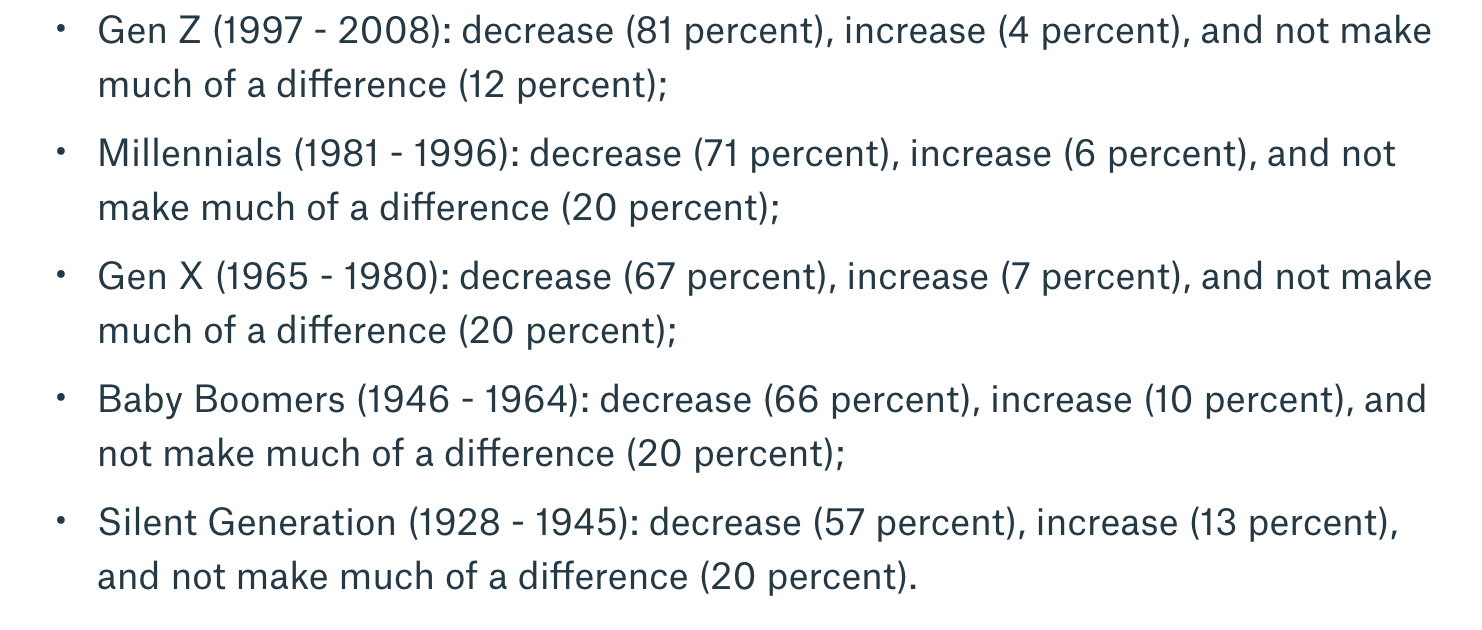
Across employed Americans, 71% of white-collar workers and 73% of blue-collar workers think AI advancement will lead to fewer job opportunities, according to the poll, which surveyed 1,397 US adults. Despite their pessimism, Gen Zers were using AI the most: YouGov found that Gen Z had the greatest familiarity with AI tools in their workplace, with 51% of Gen Zers saying they used AI weekly at their jobs.
Pew Research Center, September 2025: Partisan Opinions Have Converged Towards the Center
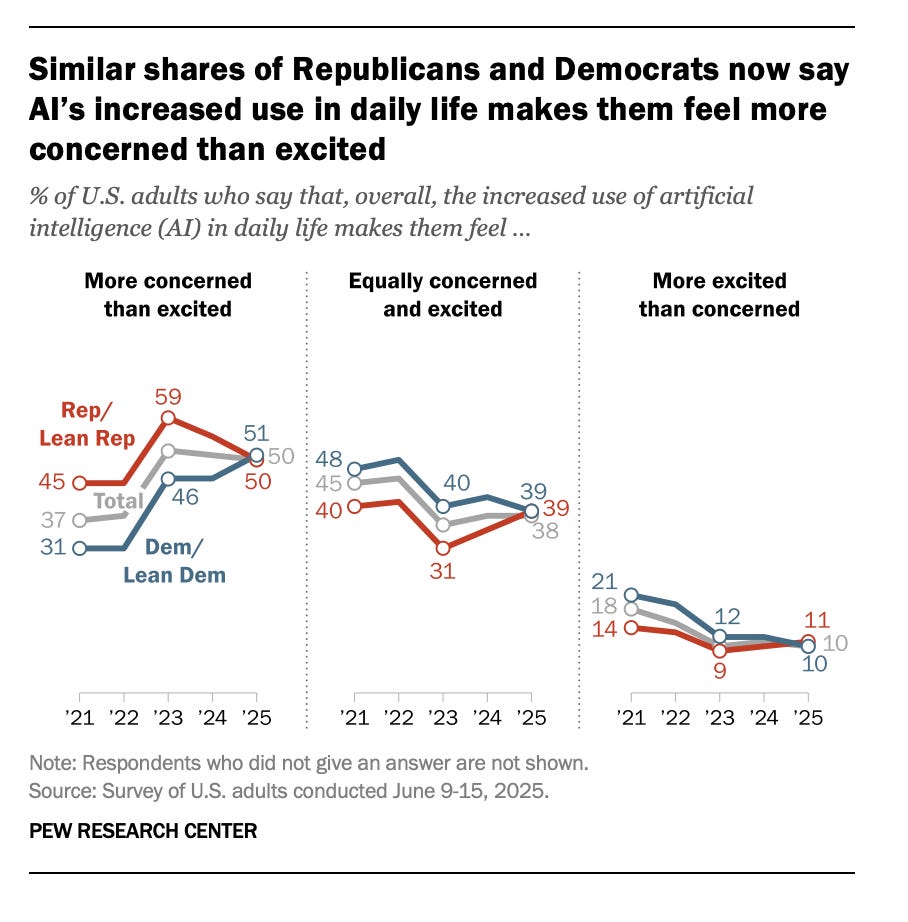
At the moment, the American public’s AI skepticism is solidly bipartisan. Republicans had been historically more wary of AI, while Democrats viewed the technology more favorably, but now both have effectively met in the middle, according to polling from the Pew Research Center published at the end of last year.
Outside of political affiliation, the progressive think tank Data for Progress found that support for AI is more split across age, race, and gender groups. Women view AI unfavorably by a 10 point margin, while men view it favorably by 16 points. White voters are slightly unfavorable towards AI at -3 points, while Black and Latino voters are favorable of the technology by 29 points and 10 points, respectively.
Gallup, September 2025: AI Safety Is Seen as More Important Than Rapid Progress
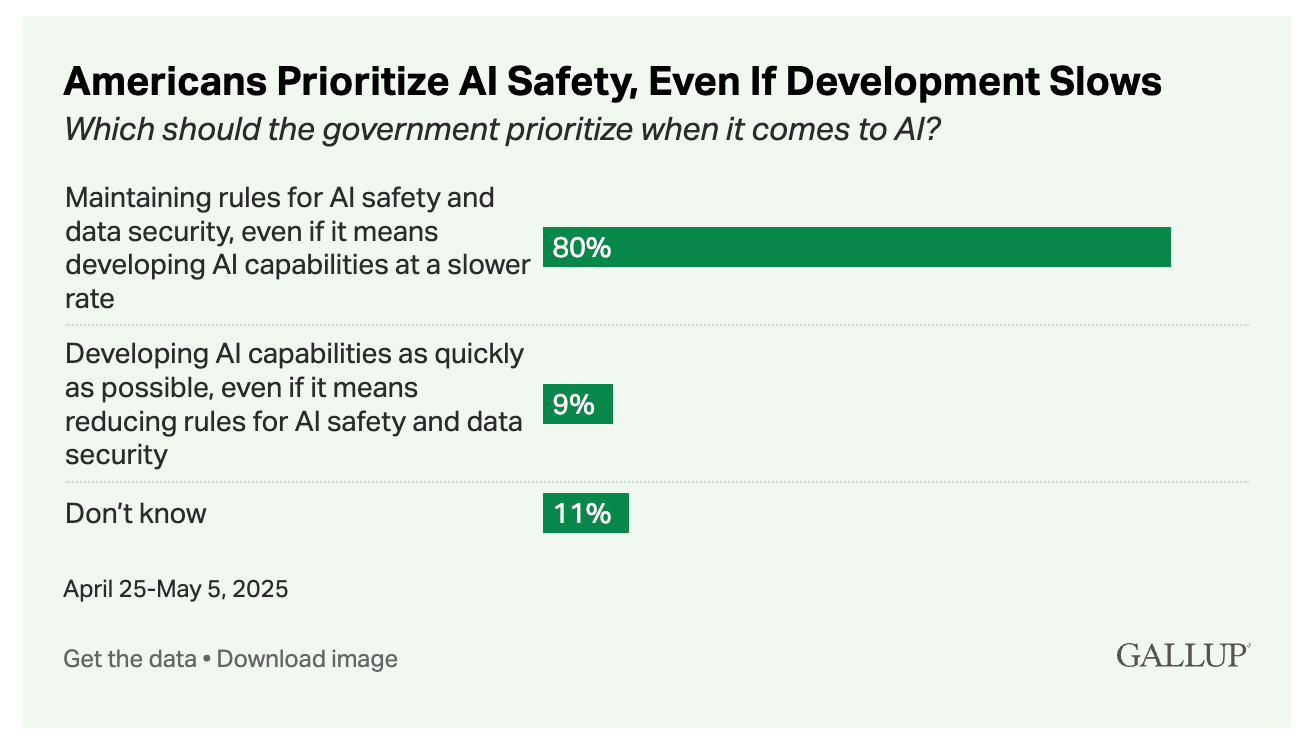
An overwhelming majority of Americans would prefer many more guardrails around the development of AI technology, even if that means AI progress would slow.
Some of this could be due to fears around a dangerous all-powerful AI that CEOs have warned about: the December YouGov survey found 77% of Americans are concerned that AI could be a “risk to humanity,” with 39% saying they were “very concerned.”
Politico, February 2026: US Adults Are Still Making Up their Minds on Data Centers
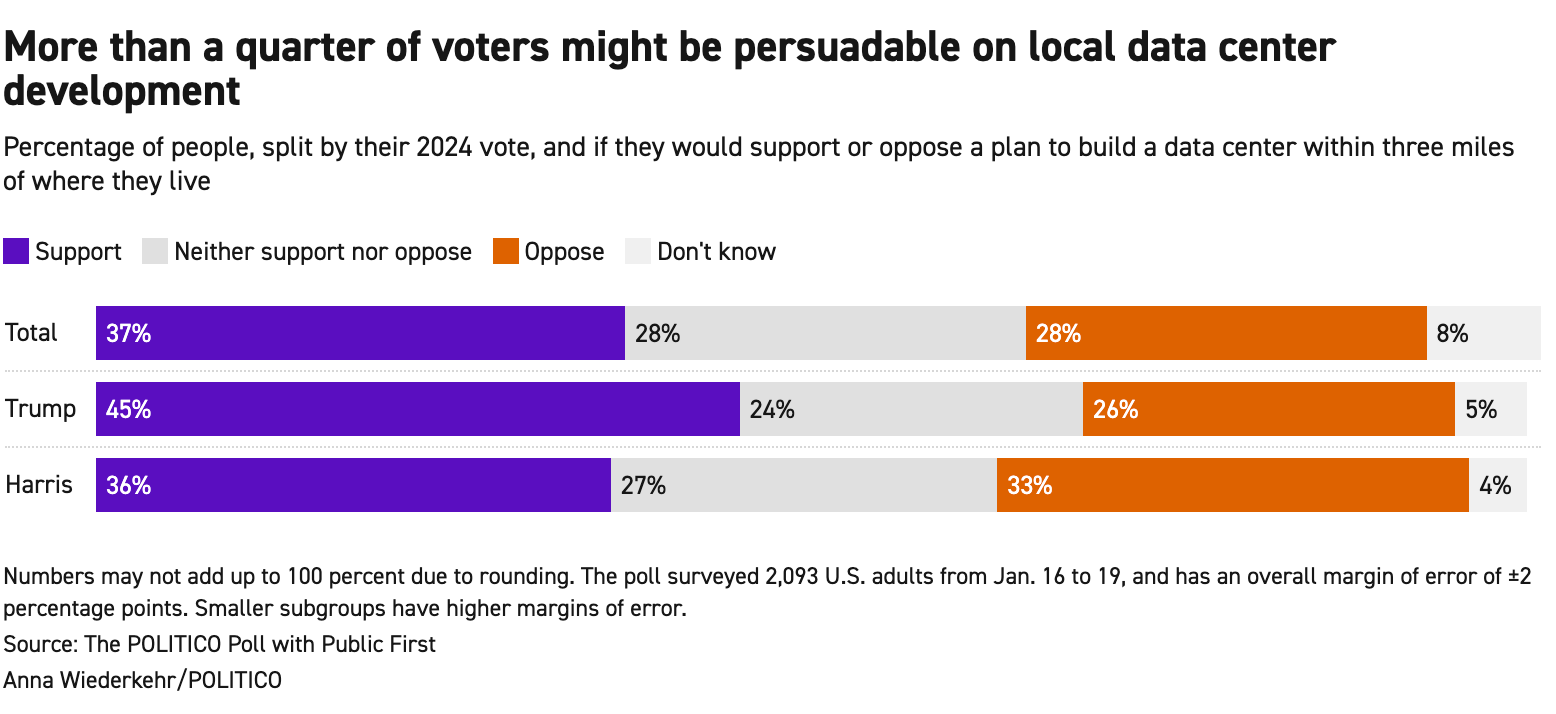
Polling around data centers is fuzzier, but Politico’s February survey found that a majority of American voters are undecided or are slightly positive about data centers coming to their communities.
Trump 2024 voters are slightly more likely to support a data center buildout near them, while Kamala Harris supporters are more likely to oppose such construction, but both sets of voters are largely undecided.
Politico didn’t survey why people were opposed to data centers, but in Quinnipiac’s similar research, 72% of respondents who oppose data center construction said electricity costs were their biggest reason, while 64% said water use and 41% said noise. Research has shown that water usage concerns are largely overblown, but the narrative remains quite sticky.
Per Pew’s relatively recent polling on data centers, “Americans tend to think that they’re bad for the environment, home energy costs, and quality of life,” said Pew senior researcher Colleen McClain, but they do see positives in data centers’ impact on local jobs and tax revenue.
Stanford AI Index, April 2026: US Sentiment on AI Is Much More Negative Than in Most Other Countries
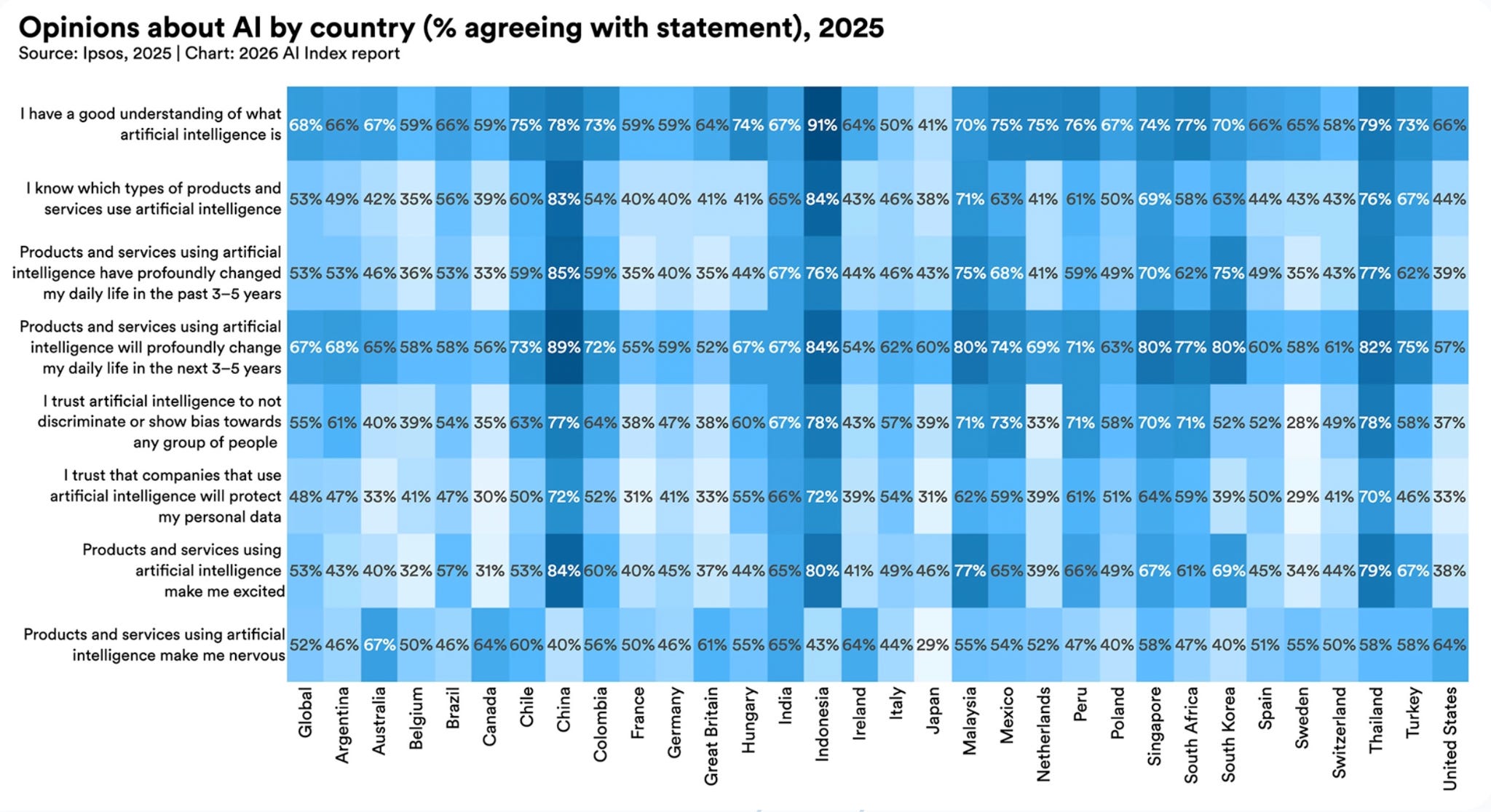
Compared to the rest of the world, US adults lean more apprehensive rather than excited when it comes to AI development. Per Ipsos’ 2025 survey, the US is on the low end of getting “excited” about new AI products at 38%, and 64% of Americans are made nervous by the increasing use of AI. In China, by contrast, 84% of those surveyed were excited about AI.
“Not only are they willing to use the technology and learn about it, but they’re more willing to welcome it into their national economies and trust that their politicians are going to do the job of protecting them,” Stanford AI Index lead Sha Sajadieh told us.
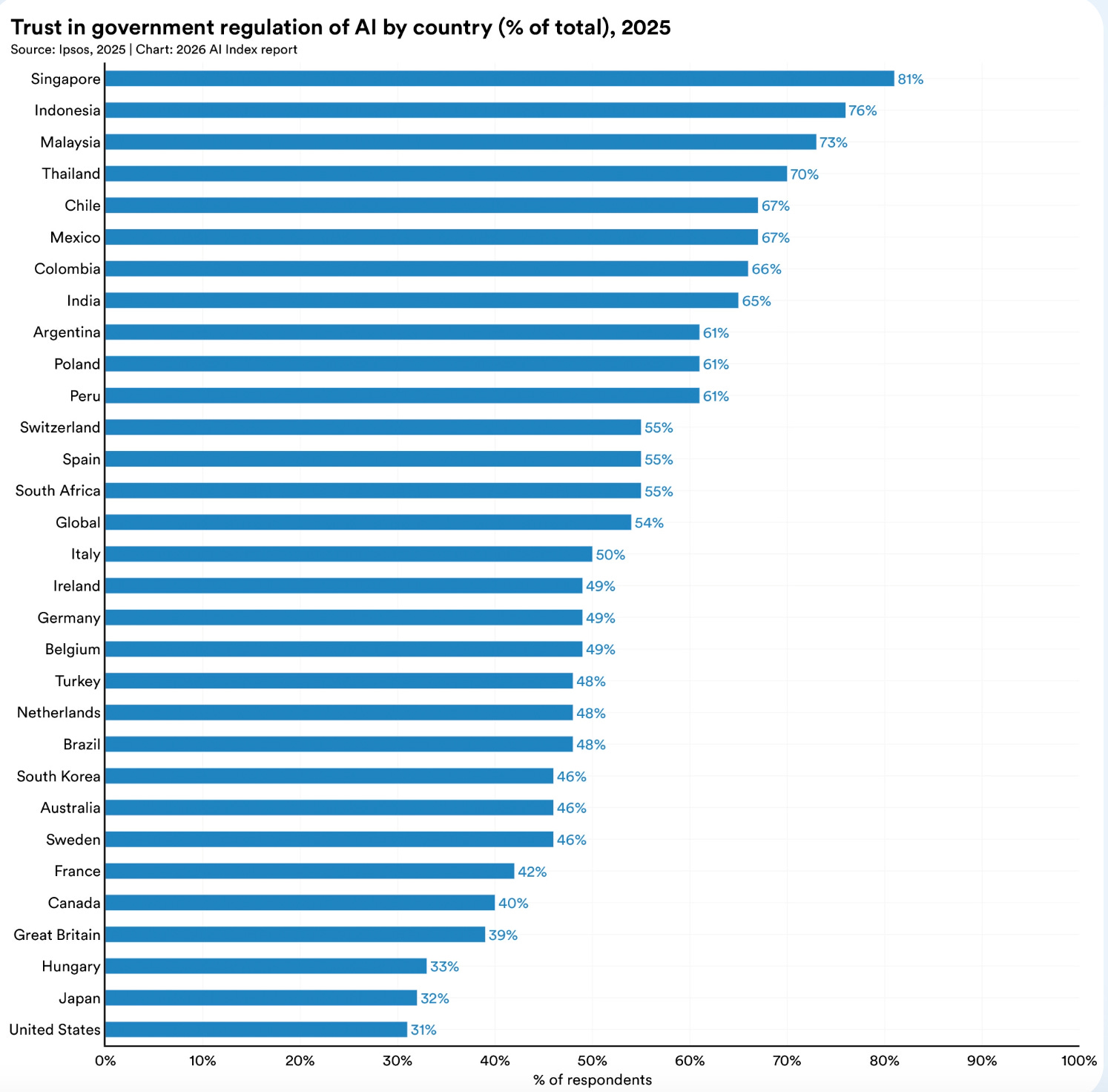
The US also showed the lowest trust in its own government’s ability to regulate AI, with only 31% of respondents feeling confident about it.
What’s the Bottom Line?
Taken together, the data paints a fairly consistent picture that economic disruption is the clear standout in what makes Americans the most nervous about AI. Notably, this polling did not differentiate between Americans’ feelings on the tech industry at large relative to AI.
An NBC News poll on Americans’ attitudes towards political figures and topics showed AI polling lower than ICE, but it did not break out tech beyond artificial intelligence. Gallup polling from the end of 2025 showed that 59% of Americans sampled view “the computer industry” positively or somewhat positively, which was a drop from a high of 75% in 2017 but still overall above water.
Politically, distrust of AI is strikingly bipartisan: both sides are looking for clearer guardrails and regulation around the technology. The Trump Administration’s deregulatory philosophy, supported by much of the industry, looks distinctly out of step with public sentiment in this regard. Americans also don’t trust their own leaders to work on the problem, though.
One very telling but very simple finding from all the polls: experts and the public are living in entirely different realities about what AI means for society. Until that gap closes, the wariness isn’t going anywhere.
For our analysis, we looked at the Pew Research Center’s survey of 5,023 US adults from September 2025, Gallup’s poll of 3,128 US adults from September 2025, Future of Life Institute’s poll of 2,000 US adults from October 2025, Navigator’s poll of 1,000 US adults from December 2025, YouGov’s survey of 1,287 US adults from December 2025, Gallup’s poll on US views of internet companies from the end of 2025, the Tech Oversight Project/Morning Consult’s poll of 1,800 US voters from January 2026, Data for Progress’ poll of 1,228 likely US voters from February 2026, Politico’s poll of 2,093 US adults from February 2026, NBC News’ poll of 1,000 US voters from March 2026, Quinnipiac’s poll of 1,397 US adults from March 2026, Gallup’s poll of 23,717 US adults from April 2026, and the Stanford AI Index’s findings from a 2025 Ipsos poll of 23,216 adults from 21 countries, including additional data from China.
Cerebral Valley
We’re Less Than Three Weeks Away from the Cerebral Valley Voice Summit on May 6. Apply ASAP to Secure Your Spot.

Time is running out to land a spot in the room at the first ever Cerebral Valley Voice Summit.
We’re bringing together the top founders building AI voice applications and infrastructure, along with leading venture capitalists, members of the media, and other AI notables.
We’ve already secured a stacked line-up of speakers and discussion leaders, like Sierra’s Bret Taylor, Runway’s Anastasis Germanidis, AssemblyAI’s Dylan Fox, Abridge’s Shiv Rao, a16z’s Olivia Moore, Cartesia’s Karan Goel, and Emergence Capital’s Jake Saper.
You won’t want to miss this one-day summit covering AI’s next big paradigm shift.
The Cerebral Valley Voice Summit is co-hosted by Eric Newcomer, founder of Newcomer and Max Child and James Wilsterman, the co-founders of Weekend.
Newcomer Podcast
Kara Swisher Unfiltered on Elon, Trump & Silicon Valley’s Biggest Lie
This week on the podcast, Eric sat down with legendary tech journalist Kara Swisher for a heated conversation on the state of Silicon Valley.
They discuss a whole host of topics, including her early prediction of tech’s rightward shift, why she thinks Silicon Valley has become addicted to playing the victim, her takes on Elon Musk, Mark Andreessen, and Peter Thiel, why she would rather have Ted Cruz making decisions about AI than the tech industry itself, and what she thinks is coming next.
It’s one of our spiciest episodes to date. Give it a listen.
Five Notable Deals
Slate Auto, Beeline Medicines, Sygaldry, Terremoto Biosciences, Slash
A slow week for big AI rounds pushed biotech and quantum startups up the rankings for funding hauls.