


The Week in Short
Anthropic dominates the conversation with its Mythos model, and spearheads a new cybersecurity consortium. Founders & investors at HumanX are wowed by frontier model progress, while Databricks and Snowflake spar onstage. Q1 data shows VCs getting much busier. Data center infrastructure and defense tech companies score growth rounds. Meta launches a new model & Amazon sees an AI payoff coming. OpenAI’s Stargate fades, but its infrastructure bets could yet pay off. John Carreyrou of Theranos fame takes on Satoshi Nakamoto. Private credit stares down the SaaS-pocalypse.
The Main Item
Anthropic’s Cyber Initiative Brings Welcome Collaboration on AI Risks
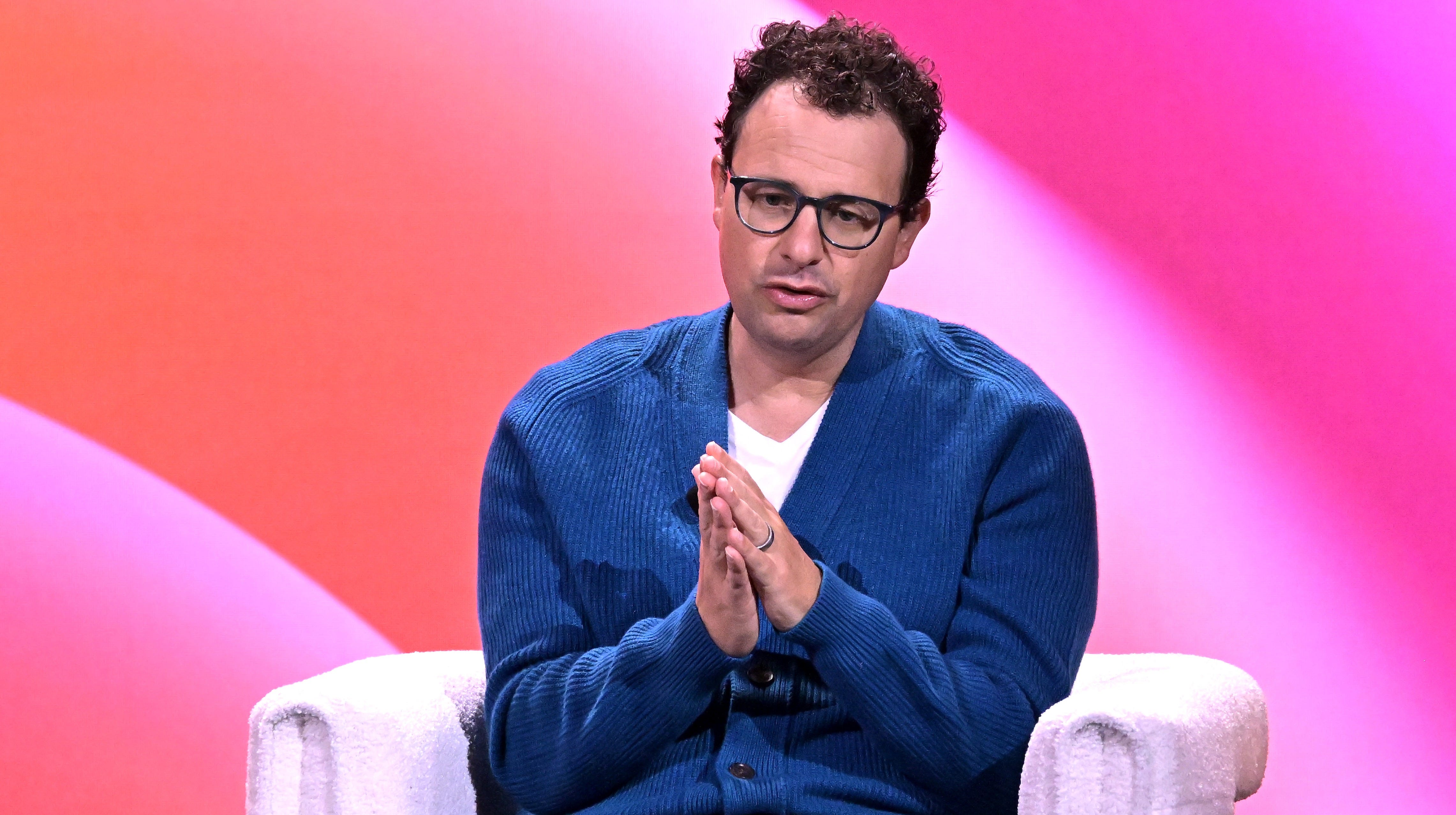
Anthropic’s limited release of its too-dangerous-to-touch Mythos model this week is a watershed in more ways than one.
It puts to rest any lingering worries about scaling walls: Industry executives and investors we spoke with this week were almost uniformly impressed with the progress of the frontier models in general and Mythos in particular — and suspect most people don’t realize what’s coming.
Mythos also solidifies Anthropic’s new-found status as the clear industry leader. Amazingly, the company is apparently set to leapfrog OpenAI in revenue run-rate, leaving many VCs kicking themselves.
Perhaps most importantly, Anthropic’s latest reveal is prompting some much-needed industry cooperation on AI risks. If generative AI is as powerful as promised — maybe it’s already AGI? — that comes not a moment too soon.
Anthropic apparently wasn’t ready to reveal Mythos at all until an accidental leak forced its hand. It then said that it had built a model powerful enough to systematically find and fix vulnerabilities in almost any piece of software — even those that had escaped notice for years — and was limiting access to trusted partners.
The company announced an industry consortium, dubbed Project Glasswing, to collectively address the cybersecurity threats inherent in state-of-the-art AI. If a model can write complex software without human help, after all, it can also spot even small problems in any stack of code. Google, Microsoft, and Amazon, among others, are all on board.
Steve Schmidt, chief security officer at Amazon, told us he was optimistic about the work ahead. “AI has helped attackers become more prolific,” he noted. “It’s up-leveled the skills of the bottom tier. But AI can really help the defenders.” He singled out Claude’s ability not just to spot weaknesses in software, but to reliably develop even complex fixes without human intervention.
Cybersecurity all but demands collective action by companies and the government, but it’s never been easy. Companies don’t like to talk about their cybersecurity problems, lest they alert attackers, competitors, customers, investors, or government regulators. It was only in 2023 that the SEC required companies even to disclose major breaches, let alone work together to prevent them. The cybersecurity industry, though steadily growing, often seems stuck in a never-ending game of whack-a-mole.
Government agencies have been unreliable partners too. Oftentimes, when cyber researchers at the NSA or the CIA discover a software vulnerability, they are inclined to keep it to themselves for their own hacking purposes, rather than inform the company so that it might be fixed. The decision on how to handle such situations has been governed by a so-called “equities” process that tries to balance risks and benefits, but it’s often contentious.
Though defending US companies, government agencies, and individuals against cyber attacks would seem to be the government’s job, at least in part, President Trump has a grudge against the main agency charged with that mission, the Cybersecurity and Infrastructure Security Agency (CISA). He blames it failing to endorse his false claims of election hacking in 2020 and now wants to slash its budget by $700 million, on top of earlier cuts (and a punitive investigation of its former director). CISA, unsurprisingly, is said to be in disarray.
Cybercrime, meanwhile, has grown into a massive worldwide industry. Ransomware alone yielded an estimated $57 billion for criminals last year and continues to disrupt a wide range of institutions. Foreign adversaries, including China, North Korea, Russia, and Iran, have widely penetrated commercial and government systems, with consequences that are still largely unknown. It’s easy enough to imagine how AI would amplify the threats.
Treasury Secretary Scott Bessent and Fed chair Jerome Powell summoned bankers to an urgent meeting this week on the potential dangers of Mythos, Bloomberg reported.
It’s more than a little ironic that it’s Anthropic leading a critical industry-wide security initiative even as the US government tries to designate it a “supply chain risk” and ban it from government systems. Anthropic had been negotiating to limit how its AI could be used for autonomous weapons and surveillance, but its bigger sin was likely opposing Trump’s anti-regulation agenda. (It’s now fighting the designation in court, with mixed results.)
On the one hand, the Trump Administration has insisted in the Anthropic case that private companies can have no role in deciding how the government uses their technology. On the other hand, it’s ideologically opposed to regulations and other measures that might help address AI safety risks, leaving private companies little choice but to take matters into their own hands.
Anthropic is doing Trump a huge favor by at least trying to get ahead of the cybersecurity issue and moving cautiously with its new model. Cooperation and competition don’t have to be a zero-sum game. The AI era will certainly require both.
HumanX Dispatch
Everyone Is Back on Team Foundation Model
Scaling laws are holding up. Reinforcement learning and other techniques are proving effective. LLMs are improving even more quickly than anticipated — especially at Anthropic.
That was the consensus among investors and executives at the big HumanX AI conference in San Francisco this week.
Anthropic’s industry-leading tech and impressive financial performance popped up constantly on the heels of the Mythos announcement and its revenue run-rate surpassing $30 billion. Investors were again wondering where AI applications would fit in: One told us that they were now doubting the prospects of highly valued legal AI companies in light of Claude’s capabilities.
Carta, the cap table software company, is literally building their product into Claude’s desktop application, so users can run queries and ask questions about fund management without switching applications, its CEO Henry Ward told Eric. Zoom CTO Xuedong Huang said an integration with Claude would let customers put meeting notes seamlessly into their Claude workspace.
Vinod Khosla (who is firmly Team OpenAI, of course) said he’s confident the big models will see massive growth, since it’s still very early days for large enterprise adoption.
A few more highlights:
The Databricks and Snowflake rivalry was on full display, with Ali Ghodsi dismissing Snowflake as being “in the rearview mirror” during his panel. Sridhar Ramaswamy insinuated that Databricks’ financials were all over the place. Both companies are losing the war of attention to the foundation model labs.
Multiple speakers said the public is massively underestimating AI’s future effects. Andrej Karpathy made a case on X on Thursday that it’s partly due to the paid capabilities of foundation models, particularly coding tools, far outstripping the free tier of Claude and ChatGPT that most people outside of tech are most familiar with.
Despite all of the rampant AI optimism, many attendees were still questioning if SpaceX, OpenAI, and Anthropic will be able to pull off their IPOs as planned later this year or next. Many people we spoke to acknowledged the risk of an AI bubble.
The Newcomer team made a group showing at the conference. Eric, Tom, and Madeline caught up with many folks including Arvind Jain at Glean, Victor Riparbelli at Synthesia, Qasar Younis at Applied Intuition, Asheem Chandna at Greylock, Anna Barber at Everywhere Ventures, Rahul Vohra at Superhuman, Bhavin Shah at ServiceNow, and Josh Constine at Signalfire.
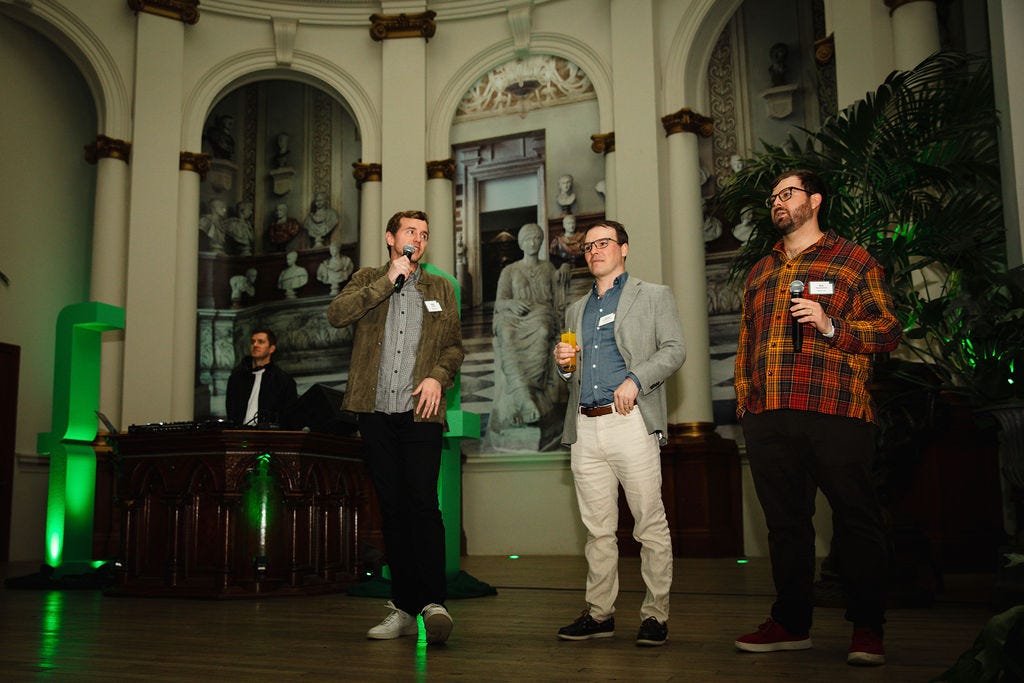

We were also very happy to host our Cerebral Valley After Dark party with Weekend at Saint Joseph’s Art Society. We set up 6 poker stations in a nod to the conference’s Vegas roots and to entice tech’s biggest poker fans.
Thank you to Weekend and to our sponsors — Airwallex, IBM, and IREN — for making the night possible.
A big congratulations to our winner Janice Chen from Mammoth Biosciences, who cleaned up.

Newcomer Podcast + Cerebral Valley Show
Jim Lanzone Talks Yahoo Resurgence, Cerebral Valley Show On OpenAI Buying TBPN
It’s a two-for-one podcast week at Newcomer! Jim Lanzone, longtime tech leader and current CEO of Yahoo, stopped by the podcast studio and highlighted his company’s comeback.
On the Cerebral Valley Show, Eric, Max, and James break down the TBPN acquisition, Anthropic’s likelihood of going public anytime soon, and the rise of Fruit Love Island and other AI slop content.
Two Big Charts
VC Activity Leaped in Q1 — and Not Just for Mega-Deals
This last quarter shattered venture funding records (depending on when you consider certain deals closed), though much of the dollar total is from just a few big deals.
Now new Crunchbase data shows that the uptick in activity was broad-based, with most firms doing far more deals than in the comparable quarter a year ago.
Accel stepped up its game, writing 16 checks in Q1, with Andreessen Horowitz and Lightspeed close behind at 15 and 14.