


The Week in Short
OpenAI closes on $110 billion in fresh capital. The Citrini report on the economic threat from AI brings fierce rebuttals, and stock gyrations. Healthtech funding sees a modest rebound. Chips startups SambaNova and MatX raise massive funding rounds. Anthropic’s high-stakes standoff with the Department of Defense intensifies as Dario Amodei stands firm. Nvidia earnings soar, but it’s never enough for investors. MrBeast presents a test case for Kalshi on insider trading.
The Main Item
OpenAI Announces its Latest Capital Haul
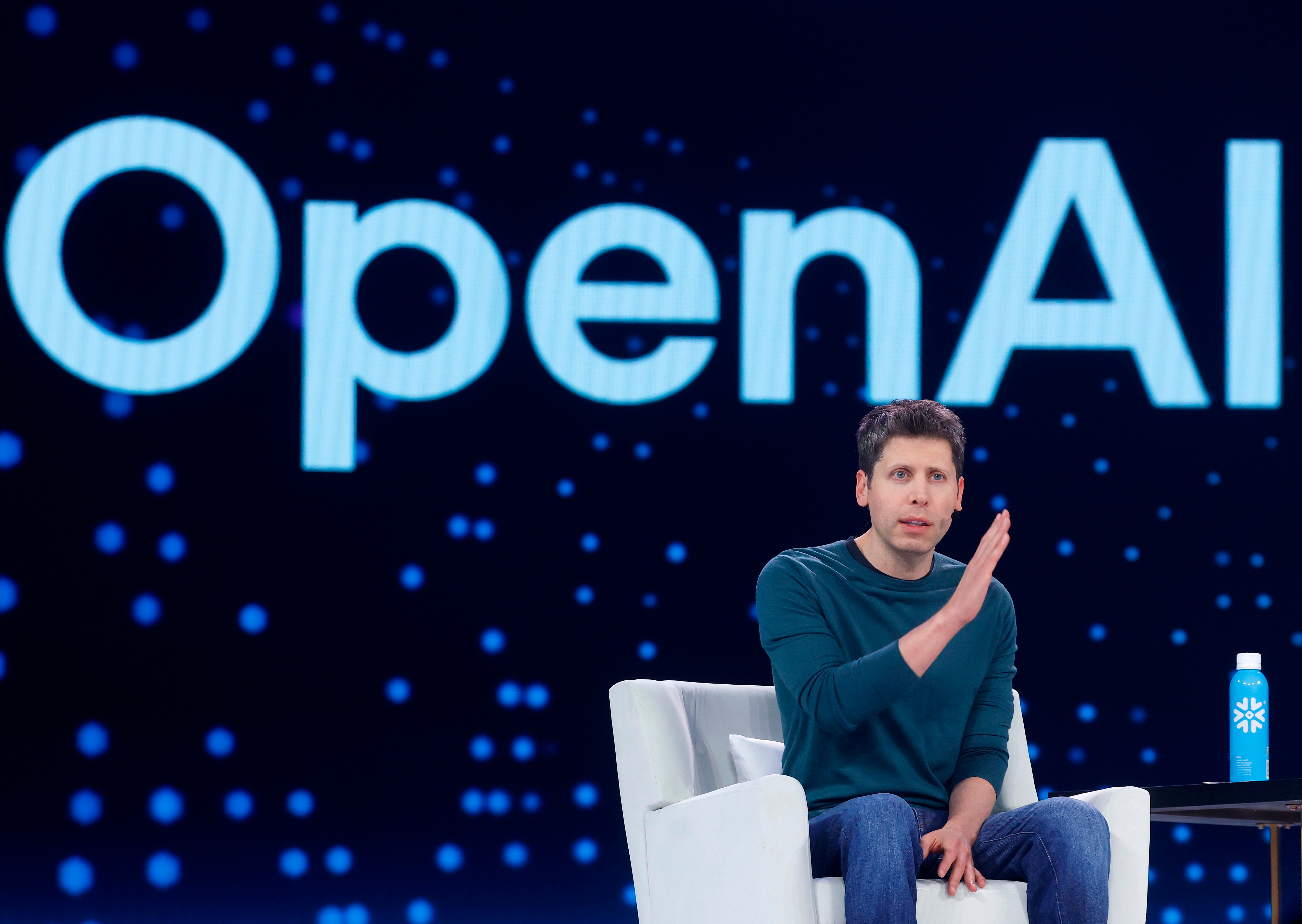
Today, OpenAI announced $110 billion in new investment from three giant corporate partners that individually and collectively set a new mark for fundraising hauls in tech. Nvidia and SoftBank will each put in $30 billion and Amazon will put in $50 billion.
There are some nuances to the investments. Amazon, in its own announcement, said its money will come in stages — $15 billion now, $35 billion later once performance targets are met. It’s also lengthening an AWS agreement with OpenAI to now spend $100 billion over 8 years and will expand its usage of its Trainium chips. Nvidia will also provide “next generation inference compute,” as OpenAI will purchase 3 gigawatts of chips.
The round goes some of the way toward answering some nagging questions about OpenAI. With more than a trillion dollars in cloud commitments, people often ask the company “how are you going to pay for all this?” The $110 billion doesn’t answer it all, but it gives you a pretty good idea.
Then there’s the narrative of OpenAI and Nvidia being at odds with each other. It first came up after the Wall Street Journal broke the news that last year’s complex $100 billion Nvidia-OpenAI financing agreement, wherein Nvidia would build 10 gigawatts of computing power and OpenAI would use the money to lease the chips from them, was “on ice.” That deal appears to have been replaced by a smaller and straightforward equity investment, but the two sides can’t be getting along that badly. Or at least we personally would love to have a frenemy who gives us $30 billion.
Interestingly, last year at a dinner for journalists, when Sam Altman was asked how OpenAI was going to pay for its infrastructure bills, he allegedly told the assembled reporters (we weren’t there) he had figured out some kind of a new financing instrument. He didn’t lay out what it was.
What’s striking is how some of the more unusual and complicated OpenAI financial structures have turned into fairly ordinary arrangements. On Sunday, The Information laid out the challenges facing OpenAI’s Stargate joint venture: very little collaboration among the three partners, with most of the data centers built under the Stargate banner being traditional bilateral deals between OpenAI and Oracle or OpenAI and SoftBank. We’ve been reporting skeptically on Stargate for some time — writing as far back as last May that the whole project was “startlingly vague“ and was better understood as a branding exercise than a real entity.
None of this means OpenAI is in dire straits. As the $110 billion round shows, the broader capital system remains firmly behind Altman and has accepted his premise that a revolutionary technology requires unprecedented funding to reach fruition.
Turns out the new financing instrument was just... a funding round and cloud deals. For all the talk of AGI, the answer to ‘how are you going to pay for all this?’ turns out to be the same one it’s always been: convince enough CEOs and other rich people that you’re going to change the world, and get them to write very large checks.
From Our Sponsor
Build AI you can ship and scale
MongoDB for Startups includes Atlas credits, Voyage AI tokens, and hands-on technical support to build and scale on an AI-ready data platform.
Join startups representing $200B+ in combined valuation.
Market Freakout
Conflicting AI Research Reports Prove One Thing: No One Knows What AI Will Do to the Economy
Last weekend, a research post imagining an AI economic apocalypse by 2028 tanked Visa, Mastercard, and DoorDash stocks overnight. By Thursday, most had recovered. The episode says more about Wall Street’s anxiety than it does about AI.
The now-infamous Citrini report offered up a frightening doomsday scenario where AI productivity gains lead to a demand shock after the bulk of white collar workers are laid off and start defaulting on their mortgages, while the value of all software and financial stocks heads to zero.
Shares of companies that were mentioned in the report tanked on Monday, with Visa and Mastercard down 4.5% and almost 6% respectively after the Citrini authors wrote that AI agents would rely more heavily on stablecoins for purchases. DoorDash stocks slumped 7% from the vision of hundreds of vibe coded delivery apps with lower fees that would tank the defensibility of their business model.
Then came the counter-narrative.
Cognition CEO Scott Wu called the report’s conclusion “honestly ridiculous” on TPBN Monday. Noah Smith titled his piece on the matter “The Citrini post is just a scary bedtime story.”
Citadel Securities went so far as to publish an all-out rebuttal to the report’s claims. At its core, Citadel Securities argues, productivity shocks like an AI boom are supply side shocks, not demand shocks. “They lower marginal costs, expand potential output, and increase real income,” Citadel Securities wrote. “They are in isolation disinflationary and growth-enhancing in the medium term.”
A16z Anish Acharya praised Citadel Securities’ post as a “banger.” It certainly holds the position that techno-optimists would prefer.
And indeed, the Citrini-induced stock rout was short-lived — the Nasdaq index was up for the week as of Thursday, Visa and Mastercard had stabilized, and DoorDash shares were 3% above their level before the sell-off.
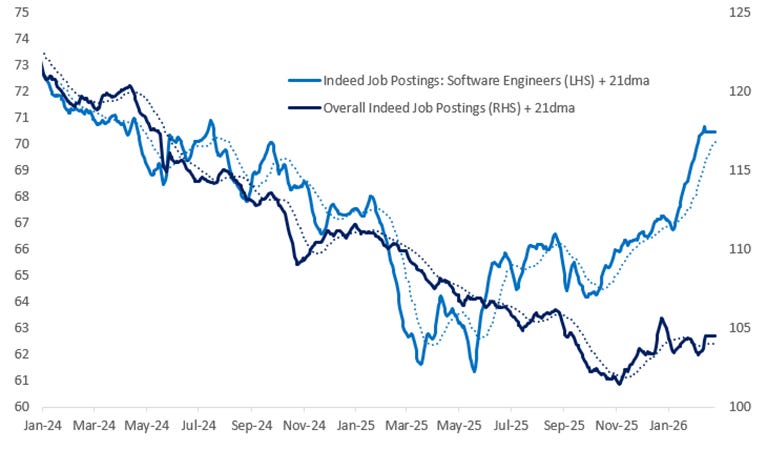
Citadel Securities notes one particularly bullish signal for those who believe the job-destroying impact of AI has been oversold: help-wanted listings for software engineering roles, which took a dive when AI coding assistants first took off, were on the upswing starting late last year as productivity spiked.
Job Postings For Software Engineers Are Rapidly Rising
Indeed Job Postings: Software Engineers + Overall Postings, Daily and 21dma
Yet almost on cue came counter-vailing news: Block on Thursday announced a staggering 40% headcount reduction, with CEO Jack Dorsey proclaiming that AI had made many roles redundant. Dorsey said most companies were way behind the curve in grappling with that reality — or seizing the opportunity, depending on how you look at it.
Block shares rallied 20% on the news in after-hours trading. That’s exactly the sort of dynamic that the Citrini report predicts.
Citrini founder James van Geelen doesn’t have a traditional Wall Street background; he sold his alternative medicine startup to private equity in 2018 and then began his economic research and writing. That doesn’t necessarily make him less credible. It stands to reason that accurate understanding of the AI future is just as likely to come from outside the arena of traditional financial analysis.
More pertinent, perhaps, is that one of the Citrini authors, Alap Shah, also runs an investment firm that had ”a set of shorts against businesses that we think are going to be disrupted by AI,” he mentioned on Bloomberg TV Tuesday.
But we’re not going to accuse them of profiteering. Derek Thompson may have said it best in his essay on the discourse: “The fact that a piece of AI science fiction rocked the stock market this week is a clear indication that absolutely no one knows how the next few years will go.”
Two Big Charts
Healthtech Funding Rebounded in 2025, Report Shows
Healthtech startups in 2025 had their best year for funding since the boom times, new data from PitchBook shows. The sector saw $15.3 billion worth of deals last year, up 26% compared with 2024.
Healthtech exits also rebounded last year with 141 deals, above the 125 recorded in 2021.