


The Week in Short
US IPOs see their biggest year since 2021, but many have slumped since their debut. AI leaders and government officials alike say fresh AI regulation is needed, but the Trump administration can’t be counted on to craft thoughtful policy. Helsing and Fireworks raise funding rounds over $1 billion. Early-stage venture stalwart Greylock announces $1.5 billion in new funds. Mira Murati’s Thinking Machines Lab releases its first model. A new Gallup poll shows Americans rapidly souring on Big Tech. Databricks is raising a Series M at a $188 billion valuation.
The Main Item
IPOs Set a First-Half Record But Aftermarket Performance Lags
What many on Wall Street expected to be a banner year for IPOs has delivered so far, with total proceeds for US IPOs already within a hair of matching the 2021 annual record of $142.4 billion. $92 billion of that has come from venture-backed IPOs, according to data from Renaissance Capital.
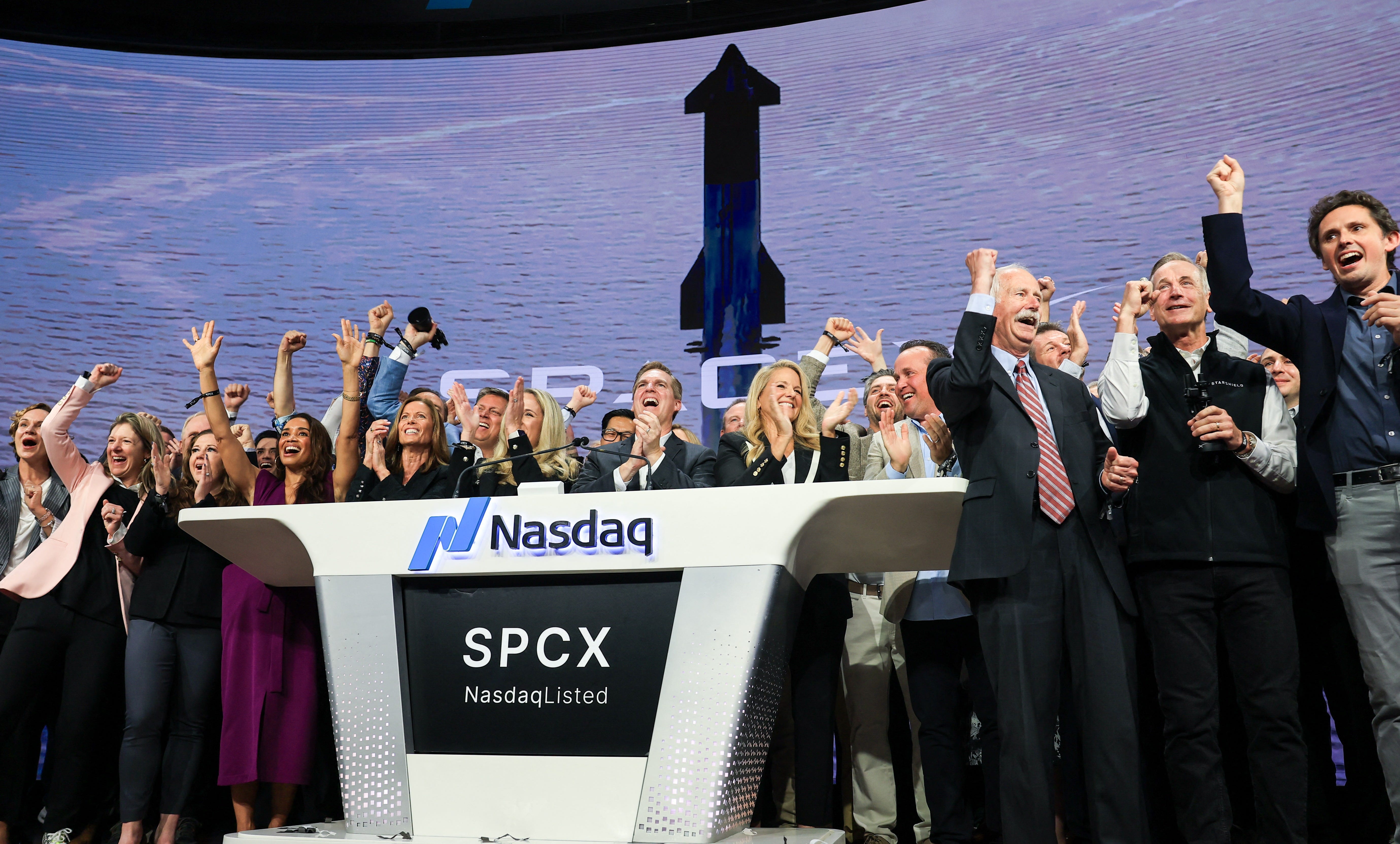
Like everything else in the AI era, the big dollars are highly concentrated — SpaceX’s record-breaking $75 billion offering was a big chunk of the total raised. But even as analysts have cautioned that SpaceX, plus the much-anticipated listings of OpenAI and Anthropic, could suck up all the investor dollars, smaller companies haven’t been scared to take the plunge.
Q1 this year saw 11 US VC-backed companies go public, and Q2 had 17. Many were biotechs, but in addition to SpaceX, chipmaker Cerebras capitalized on the AI excitement. At the same time, the Italian software roll-up Bending Spoons went out July 1 at $29 a share and saw its stock pop 40% in its debut, before falling back to $32. Turns out there’s still an appetite for classic software brands.
“Even if you’re a quirky Milanese company, if it’s a good company, people will buy,” FirstMark Capital’s Rick Heitzmann told us this week. “You don’t have to be putting data centers in space.” He’s hearing many companies have been updating their Q2 numbers and getting ready in case they want to test the markets post-Labor Day.
However, SpaceX’s falling share price could yet put a damper on those plans as market volatility comes for AI and defense stocks.
University of Florida’s Prof. Jay Ritter, known as “Mr. IPO” for his long history tracking the data, noted that while the first day price jump for IPOs this year has been above historical averages, aftermarket performance has been disappointing.
SpaceX shares have been sliding for the better part of two weeks and closed Thursday below the IPO price — and that’s ahead of the coming lockup expiration. Cerebras peaked just two days after its debut at $386, only to fall by more than half to $178 at Thursday’s close. Of the 10 biggest venture-backed companies that have gone public over the past year, only two are trading above their offering price.
Concerns about continuing market volatility are escalating. Eddie Molloy, the co-head of global equity capital markets at Morgan Stanley, told Bloomberg that markets can expect some of the “steam” from the AI momentum to come off a little bit.
Still, there’s plenty of latent enthusiasm. General Atlantic’s latest analyst note on the topic from June is optimistic that mid-cap companies will be able to get out successfully in the back half of 2026, but would favor larger offerings in the $750 million to $1 billion range.
Contenders waiting in the wings include Discord and Kraken, both of which have confidentially filed but pulled back from going out earlier this year due to market uncertainties. Neoclouds Lambda and Nscale both hired banks to help with the process last year, but neither yet has a target date.
Vercel is another name that came up while gossiping with investors, with founder Guillermo Rauch signaling publicly that he’d be interested. If companies do go this year, it likely will be at the tail end of Q3 or into Q4, sources tell us.
PitchBook venture capital analyst Kyle Stanford notes that sinking post-IPO shares have been common for venture-backed companies for years, “at least until their financials mesh a bit better with how public market investors price companies,” he told us.
“I don’t think that means all these companies are bad, or that the initial price is wrong, or that investors are skittish. There is an adjustment period for private market values to match public market pricing, and there are a lot of employees and investors trying to realize their returns after the lockup, which adds selling pressure.”
Ritter isn’t worried about a coming oversupply of IPO shares, even if the big labs do go out. “I’m not concerned about a lack of investor demand for promising companies going public,” he said.
Anthropic still plans to IPO by the end of 2026 and has started to plan investor meetings, according to Bloomberg. On the other side of the world, DeepSeek is making plans too.
OpenAI, on the other hand, is seriously considering a delay until 2027 after Sam Altman’s push to get the company’s valuation over $1 trillion in the private markets first, according to The New York Times.
Data from PitchBook highlights the 10 largest US VC-backed IPOs since January of 2025, including their initial price, all-time intraday high, and close as of this Thursday.
Policy Watch
A Consensus Is Emerging on AI Regulation. Execution Will Be the Hard Part.
Manifestos from industry leaders calling for AI regulation are suddenly coming fast and furious, and a rare consensus seems to be emerging that something must be done.
The latest plea, and among the most detailed, comes from Google DeepMind co-founder Demis Hassabis — among the most respected people in the industry — who calls for the US government to assemble a regulatory agency modeled on the Financial Industry Regulatory Authority. It would be staffed with top-tier AI experts and empowered to review new AI models for safety risks, though compliance would be voluntary at first.
His proposal drew praise from Anthropic’s Jack Clark, among others, who noted: “At this point, everyone at the frontier of AI agrees that third parties should test out AI systems and use these to develop standards to feed into policy.” Anthropic CEO Dario Amodei had until recently been a lonely voice insisting on the need for regulation.
OpenAI’s Sam Altman is now on board too, opining in the Financial Times on the case for an international regulatory body that doesn’t look too dissimilar to what Hassabis is proposing. Microsoft’s longtime policy and politics honcho, Brad Smith, has ideas too.
Even the Trump administration is moving away from its anti-regulation stance and is now eager to assert its authority over AI, as evidenced by its recent, if brief, export bans on new frontier models from Anthropic and OpenAI.
It’s a great moment for enlightened American leadership on a set of questions that are vitally important — and maybe existential — for mankind.
Yet it’s hard not to worry that thoughtful policymaking isn’t what we’re going to get from an administration that’s made a point of denigrating professional and scientific expertise and is led by a man who sees all human and governmental affairs as matters of personal aggrandizement and money-making.
There’s an odd lack of alarm over the obvious incapacities of the Trump regime at this crucial juncture, and the presence of grossly unqualified political hacks like Pete Hegseth, Kash Patel, Bill Pulte, and Todd Blanche atop departments that would normally play a central role in developing technology and national security policies.
The proximate danger is fumbling the critical and complicated export control issues surrounding frontier models and top-tier chips. It’s not clear if there was any process at all behind the export bans on Mythos and GPT-5.6, or the lifting of those bans after a couple of weeks, or whether it was simply Trump’s typical whim-and-a-prayer approach. Semiconductor export policies are similarly opaque and fluid, and seemingly affected by stock market concerns. That’s no way to run the railroad, especially with the future of humanity at stake.
An equally worrisome threat is that Trump’s corruption and incompetence will prevent the creation of the type of US-led but independent regulatory structures that everyone now agrees are needed. That could result in effectively ceding AI policy to Chinese technocrats and American profiteers, who are all too happy to throw their weight behind whatever promises the best returns.
Stakeholder capitalism isn’t a popular notion these days, but AI provides perhaps the best illustration yet of its importance as an idea. If the technology is as powerful as its proponents promise, the argument that companies must pursue the interests of shareholders to the exclusion of all else makes little sense. All of us will have a stake in their decisions.
There’s been plenty of hand-wringing about the risk of unelected AI CEOs having too much power. At the same time, though, the private-sector leaders of the AI revolution should indeed be answerable, on some level, not just to shareholders, but to society at large. If the government can’t or won’t do the job, the industry may yet have to figure it out for itself.