


The two-man race is among the most dependable sources of drama in Silicon Valley. Uber v. Lyft, Rippling v. Deel, Brex v. Ramp — the path toward dominating a new field goes through a high-cost land grab with a directly competitive product.
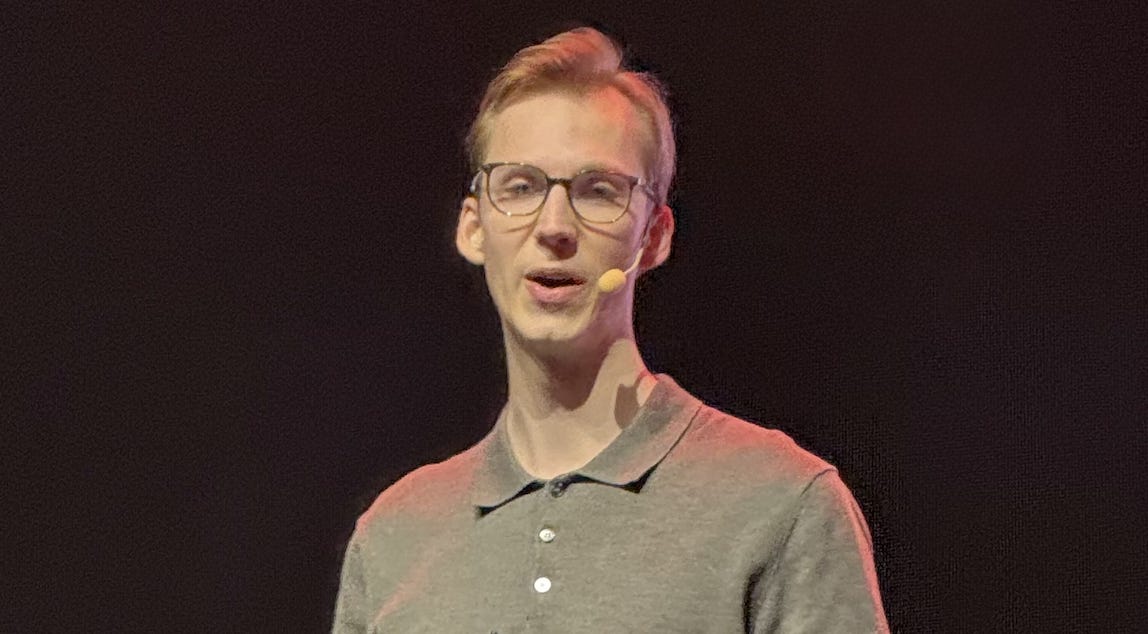
The latest is a quietly fierce battle between legal tech startups Harvey and Legora. Harvey, co-founded by attorney Winston Weinberg, has jumped out to an early lead, scooping up the biggest investors in Silicon Valley and signing on more clients. But Legora is a fast-rising follower, started by Swedish engineer Max Junestrand (pictured), whose investors believe its deeper enterprise product will overtake Harvey in the near future
The big Silicon Valley VC firms are loaded up on one side or the other: Harvey has Sequoia, a16z, Kleiner Perkins, and Coatue; Legora has Benchmark, Bessemer, General Catalyst, Accel, and ICONIQ.
The two startups recently traded fundraising announcements: Harvey last week said it raised $200 million at an $11 billion valuation, following Legora’s late February raise of $550 million at $5.5 billion.
Harvey has more than $200 million in annualized revenue, which is around double Legora’s rate, according to people familiar with their finances. But Legora, which was started a year later, is growing faster, one of its investors tells me.
The dynamic has gotten chippy. Junestrand, a bright and canny 26-year-old, wouldn’t refer to Harvey by name in our conversation. He instead spoke vaguely of the competition while insisting he was paying it no heed.
“If we were in a professional swimming race, I would say that Legora is looking down and other people are looking to the side, losing speed,” Junestrand said.
The even-keeled Weinberg, 31, cast Legora as opportunistically trying to draft off Harvey’s success. I asked Weinberg if he often found clients weighing between the two offerings. “—And like 30 others,” he quickly responded.
“We’re pitted against each other because — second mover, that’s what you want to do. You want to make sure that you’re part of all the press releases of the bigger player because it kind of brings you up,” Weinberg said.
Entertaining as the two-man race may be, the real competition for both is coming from all sides. Harvey and Legora are built on top of foundation models from OpenAI, Anthropic, and Google; the specter of Claude and ChatGPT enterprise devouring both of their businesses looms over them as it does all companies that could be tagged with the AI wrapper label.
Outside of that, there are a series of more niche legal AI startups going after specific practices. Weinberg’s “30 others” was barely an exaggeration; other fast rising AI startups in the space include:
EvenUp, focused on personal injury law
Eve, for plaintiff law firms
Spellbook, for contract drafting and review
Darrow, for class action litigation
Summize, for contract lifecycle management