


The Week in Short
SpaceX exercises its option to purchase Cursor, in a win for xAI, a16z, Thrive, Google, and Nvidia. Governor Gavin Newsom treads a thin line between pro-tech policies and data center backlash. Vanta founder Christina Cacioppo dishes on compliance world drama on the podcast. VC funding for US AI startups far outpaces their international peers. A Wired exposé on Peter Thiel’s Dialog Society generates a lot of hand-wringing over not a lot of substance. Allbirds takes its AI rebrand seriously. Silicon Valley mourns the unexpected loss of Capital Factory founder Joshua Baer. OpenAI hires Noam Shazeer away from Google.
The Main Item
Cursor’s Exit Marks a Historic Windfall for VC M&A
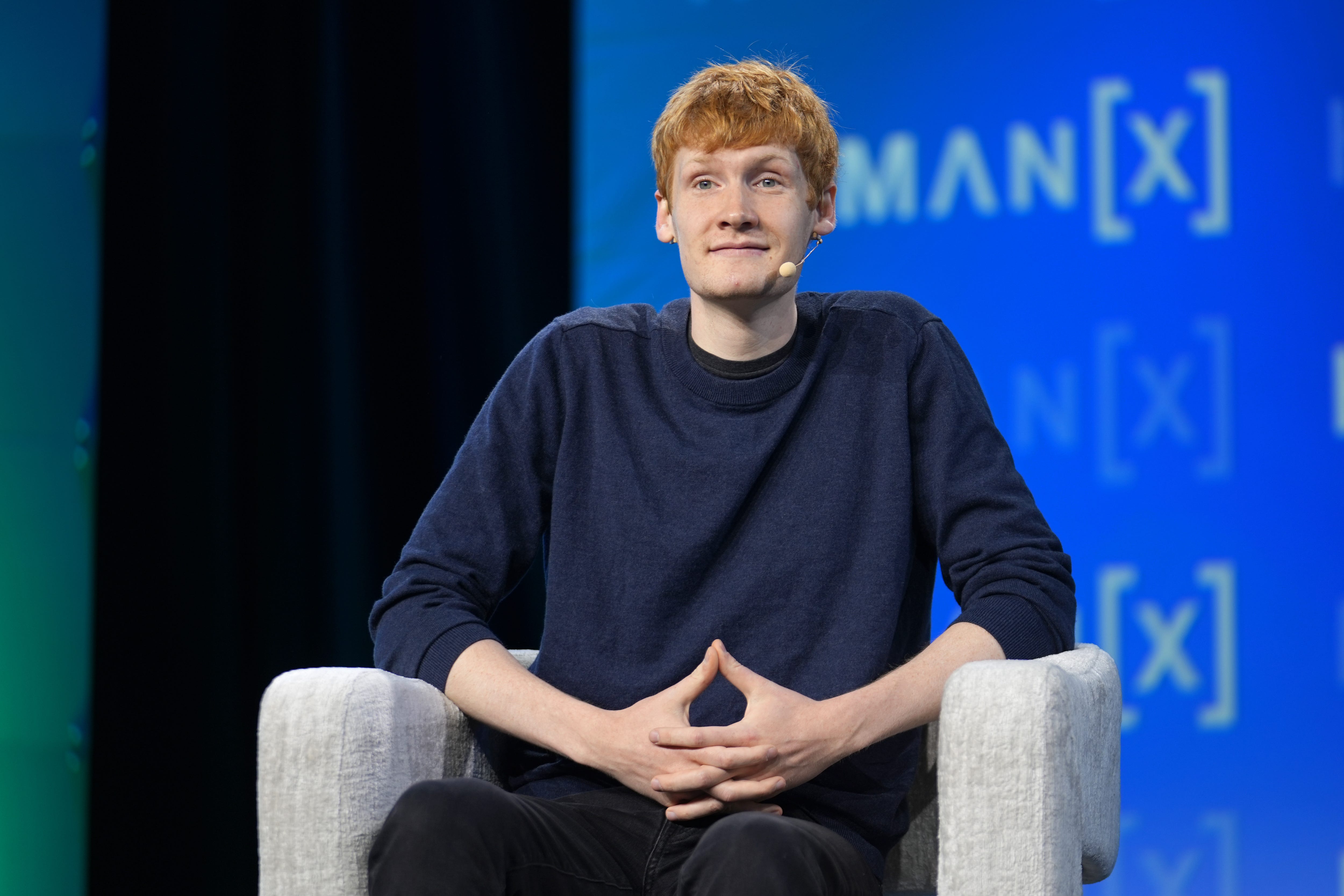
It wasn’t very long ago that Cursor’s future was a topic of fierce debate.
The company was too dependent on Anthropic and couldn’t control its costs, critics said. Customers were irritated by its moving-target pricing. It was a very good coding tool, a lot of developers agreed, but Claude Code, and OpenAI’s Codex, would render it irrelevant.
It was in talks to raise more funding at a valuation of $50 billion or more, but not everyone was convinced.
Never has there been a better reminder that a company is worth what someone will pay for it.
All of the above criticisms were at least partially true — but unimportant, in the end, because Elon Musk desperately needed a shortcut into the frontier AI race, and especially the red-hot coding segment, and he needed it now.
To say it was a fortuitous turn of events for key backers including a16z, Thrive, Google, and Nvidia is an understatement: instead of having to re-up their bets, they’ll get the biggest M&A payout in the history of venture capital by a wide margin (IBM’s $34 billion acquisition of Red Hat is second). A16z’s stake is worth $10 billion, while Thrive’s is worth $4.2 billion, per Forbes. The company’s four co-founders will be worth $2.7 billion each.
There is of course a caveat, which is that SpaceX itself is also a pretty good reminder that companies are worth what people will pay for them. The company is now has a market cap of about $2.5 trillion, roughly the same as Amazon — and the latter expects $800 billion in revenue this year, compared with $35 billion at SpaceX. There’s no math that supports SpaceX’s share price, only hopes and dreams.
Cursor’s employees and investors, who will get their payout in SpaceX stock that’s climbed almost 50% from its already sky-high offering price, are now fully implicated in those hopes and dreams too. The all-stock, $60 billion buyout will be based on the average closing price of SpaceX shares in the seven days immediately prior to the deal closing, which is expected to happen in the third quarter.
With SpaceX stock performing well, Musk will surely be eager to close the deal fast. Incredibly, $60 billion in stock seems like a rounding error — but that dynamic is unlikely to last for long, as a sharp dip in the shares on Thursday showed. Get it while you can.
Cerebral Valley AI Summit
Last Chance to Apply for the Cerebral Valley AI Summit London

We’re less than a week away from our mid-year Cerebral Valley AI Summit in London.
There are just a few spots left for the right people, so you can apply to attend now for last-minute consideration.
Tech + Politics
Gavin Newsom’s Data Center Stance Signals a New Pragmatism. It Carries Big Political Risks.
As California Governor Gavin Newsom ramps up his presumed presidential campaign, he’s carving out a unique profile on tech issues, positioning himself as a pro-innovation Democrat who supports many industry priorities even as he backs AI regulation and bashes the tech-loving Trump Administration.
It promises to be a very tough balancing act in a year when tech is on the ballot in a way that it’s rarely been before. An ascendant Elon Musk isn’t going to make it any easier.
An insightful Politico story on the data center issue by Noah Baustin and Christine Mui illustrates Newsom’s dilemma. The backlash against the massive, power-hungry buildings crammed with Nvidia chips has abruptly become a major political movement around the country. Polls show that the growing opposition is bipartisan, but it’s an obvious issue for Democrats to run with, and progressives led by Sen. Bernie Sanders and Rep. Alexandra Ocasio-Cortez have been at the front of the pack.
Newsom, though, is not on board. He blocked legislation that would have required data centers to report their water usage and hasn’t joined calls for a moratorium. Perhaps because data centers were commonplace in California even before AI mania hit — it has the third-most of any state — opposition to them has been muted. But it’s building fast, reports Politico: a small city in Southern California recently became the first to impose a data center ban, and it doubtless won’t be the last.
In the meantime, the IPO of SpaceX has made it clear that massive data centers are central to Elon Musk’s grand vision. Musk in turn has long taken the view that opposition to said vision, even when it comes in the form of laws, is to be ignored: His “Colossus 2” data center in Mississippi has merrily installed dozens of gas turbines without the required permits, spewing noise and pollution on nearby communities.
Musk’s law-breaking has the full backing of President Trump. Just weeks after agreeing to a $1.5 million settlement of an SEC case against Musk for his failure to disclose that he was accumulating a large stake in Twitter — a gambit that saved him some $150 million on his takeover of the company — the Trump Administration jumped into a Mississippi lawsuit over the gas turbines, declaring they were essential for national security.
Musk and the Trump Administration joining arms to run roughshod over community opposition to AI data centers — that promises to be a valuable political gift for Democrats. SpaceX’s triumph may have improved his standing a little bit, but Musk remains one of the least-liked public figures in America. Unlike the President, much of the country isn’t feeling the promise of AI.
All of this will leave Newsom playing defense in the Democratic primaries against the charge that he’s too cozy with tech, and that he’s abandoned his long-standing environmental principles in refusing to take up the data center fight.
Yet it also presents an opportunity for Newsom to lead on an important and thorny issue. He can make the case that we need data centers because we need cutting edge AI, for many reasons, but that we can build them in a way that respects other needs and values.
It’s fashionable to criticize California’s thicket of rules and regulations when it comes to building things, but tough permitting requirements and environmental reviews sound like just the kind of thing that’s needed to make sure data centers aren’t unnecessarily destructive — and to stem the backlash against AI.
“California has planning frameworks and regulatory safeguards in place to protect Californians,” a Newsom spokesperson told Politico, adding pointedly: “We can’t speak to what other states are lacking.”
Tech leaders often believe, incorrectly, that public opposition to their endeavors is a messaging problem. If Newsom can win their trust — he’s also been a fierce opponent of the state’s proposed billionaire tax — he might be able to show them that when it comes to winning over voters, deeds matter too. In the process, he could create a different kind of political brand, one that could conceivably play in the primaries and the general election alike: Gavin Newsom, the pragmatist.
Newcomer Podcast
Christina Cacioppo Unfiltered on Fake Compliance, AI Security & Building a $4 Billion Company
One Big Chart
AI Boom Concentrates VC Funding in US Companies
Unlike the go-go years of the late 2010s and early 2020s, VC dollars have stayed mostly stateside during the AI funding explosion.
Fresh data from Crunchbase this week shows that so far, US startups have raised around 80% of the venture capital dollars deployed so far this year, with only $96 billion going to the rest of the world.
That’s a big shift from five and ten years ago, when rest-of-world funding totals exceeded the US While funding levels outside the US haven’t rebounded from their 2021-2022 peaks, there are some silver linings: UK startups have already raised $16.5 billion this year, compared with $19.5 billion in all of 2025. Startup investment in major tech hubs like France, Spain, and Germany are all on track or trending slightly above last year’s totals as well.