


The Week in Short
California’s Billionaire Tax is heading to the voters. Silicon Valley is fighting back, led by a newly political Sergey Brin and his MAGA-pilled girlfriend. Stargate sees shakeups as more Americans express their ire towards data centers. Extra-large seed rounds gobble up more than half of seed capital. We’re in the courtroom as Elon Musk takes the stand and denounces OpenAI’s for-profit transformation (though he liked the idea at the start). A top DeepMind researcher raises 10 figures for his AI neolab. Tech earnings go well for Google, less so for Meta. Chinese regulators order Meta to unwind its acquisition of Manus.
The Cerebral Valley Voice Summit is next week.
The Main Item
Sergey Brin Gets Political as Silicon Valley Preps for a High-Stakes Fall Election
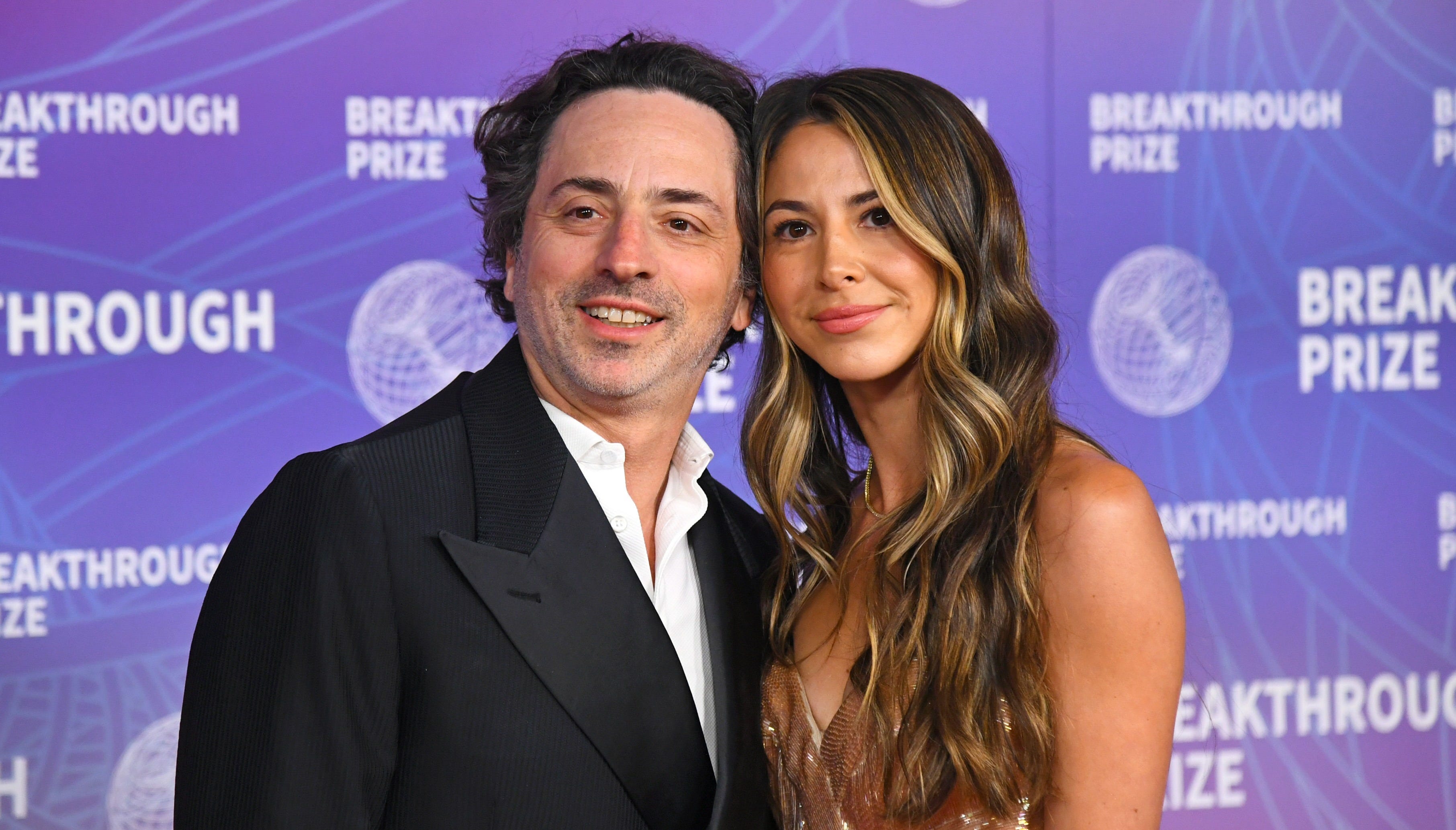
Silicon Valley is freaking out about California’s Billionaire Tax Act. It’s easy to see why.
Even aside from the general rule that people hate paying more taxes, the California proposal would tax paper gains, and in some cases assign the value of private company shareholdings based on voting control. Such provisions could result in extraordinary tax bills for some founders.
On X, the indignation was flowing fast and furious this week after proponents of the measure announced they’d collected almost twice as many signatures as needed to qualify it for the November ballot. How could California be so stupid as to chase away the entrepreneurs that have made its economy so great?
Sergey Brin even got in Gavin Newsom’s face about it (the governor now opposes the tax). Brin, who’s moved to Nevada, has spent at least $57 million (and counting) on counter-measures, apparently in the hope of eventually moving back. (He’s pictured above with girlfriend Gerelyn Gilbert-Soto, a vocal Trump supporter).
There’s a similar dynamic afoot in the city of San Francisco. Unions have sponsored a reprise of the Overpaid Executive Tax, which was first passed in 2020 but then mostly eliminated in a 2024 voter-approved tax overhaul. The city can’t impose income taxes, but a levy on businesses with highly paid CEOs is a way to “tax the rich,” and the unions shamelessly walked away from the overhaul compromise to take a new tax to the voters. In the city, too, opponents in the tech industry, led by former Sequoia chair Michael Moritz and Ripple founder Chris Larsen, are sponsoring a countervailing measure.
The state proposal would impose a one-time wealth tax of five percent on anyone with more than a billion dollars in assets, with the proceeds to fill the gaps in the state’s healthcare budget. It’s drawn special ire for a clause on valuing private company shares which reads: “The percentage of the business entity owned by the taxpayer shall be presumed to be not less than the taxpayer’s percentage of the overall voting or other direct control rights.”
A provision allowing people to appeal if they can show that a valuation is overstated makes that outcome unlikely. Still, the state would appear to have a lot of discretion in making judgment calls on asset values — not exactly comforting for those in the crosshairs. (Interestingly, real estate is not counted in the calculations.)
The measure also has the demerit of prescribing specifically how the new tax revenues would be spent. Such provisions are common in ballot measures and mainly serve to further hamstring the state’s already Byzantine budgeting process.
Building a Better California, a new political group whose key backers include John Doerr as well as Brin, Michael Moritz, Chris Larsen, and Eric Schmidt, is leading the charge against the tax, sponsoring multiple initiatives that would cancel out the billionaire tax if they get more votes; one of them would bar any future wealth taxes.
Winning will be no slam dunk.
Silicon Valley investors and executives haven’t done a very good job of selling their agenda. Californians who feel squeezed by the cost of living don’t reflexively blame Democratic policies, nor do they do the math on business relocation incentives. They see a lot of young billionaires explaining why they deserve their money — and conclude that more taxes on said billionaires would be just fine.
Relatedly, there’s been a lot of moaning on X this week about how tech’s preferred candidate for California governor, San Jose Mayor Matt Mahan, isn’t getting any traction. But anyone schooled in California politics could tell them that *any* newbie candidate lacking statewide name recognition would struggle. Also: San Jose is run by a city manager, and for all Mahan’s appeal his track record is thin.
The sudden flurry of tech exec enthusiasm for Republican Steve Hilton, who’s married to a well-known Silicon Valley executive and has been endorsed by Trump, is bound to end in disappointment as well. Barring an unlikely scenario where Hilton and his GOP rival manage to win the top two spots in the non-partisan gubernatorial primary and face each other, the chances of a Republican winning the general election are close to nil.
From where we sit, the fall vote is shaping up as an excellent case study in the debilitating flaws of California’s system of “direct democracy,” with its well-used and abused processes. We can now look forward to an incessant barrage of misleading advertising across every medium — hardly what the “progressives” of the early 20th century had in mind when they invented a citizens’ counterweight to a state government that had been indelibly corrupted by the Southern Pacific railroad.
At the same time, the election could be a wake-up call for Silicon Valley executives who spend too much time talking to one another and too little considering how their politics play outside their bubble.
There’s still a chance that Governor Newsom could persuade the billionaire tax’s sponsor, a powerful healthcare union, to withdraw the measure in exchange for some other mechanism for boosting healthcare funding. Leaning into a deal like that would serve everyone well.
Correction: An earlier version of this story incorrectly characterized the voting-control provision that can be used to determine the value of assets. It applies only to privately-held companies and would not affect the Google founders.

Newcomer is hosting the Cerebral Valley Voice Summit on Wednesday, May 6. We’re running out of space but will continue reviewing applications. Apply if you’re a voice-pilled founder or investor.
Newcomer Podcast
Katie Jacobs Stanton Unfiltered on Tech’s Silence, Sam Altman & the AI Bubble
Silicon Valley has more power than ever, so why won’t it speak up?
Katie Jacobs Stanton, former Twitter executive, Obama White House alum, and founder of Moxxie Ventures, joins Eric to talk about what's really happening inside the Valley right now — why tech leaders stayed silent when ICE showed up in Minnesota, what Sam Altman’s Molotov comment really exposed, and why Stanton thinks the current AI cycle is building on quicksand the same way the dot-com era did.
Stargate Shakeup
Datacenter Buildout Hits Snags Even as Spending Soars
Despite ever-increasing capex from the hyperscalers, the data center buildout is getting harder to sell.
The grand vision of Stargate has been reduced to a more simple partnership agreement. The Financial Times reported Tuesday that the Stargate team has halted plans for data centers in Norway and the UK while pausing expansion plans in Abilene, Texas, with datacenter developer Crusoe. Meta has poached several Stargate leaders away from the company.
Instead of building out its own data centers, OpenAI has bet that it can continue its string of leasing agreements with third party providers, like Oracle, Broadcom, and CoreWeave. SoftBank, the original partner in the first formation of Stargate, is building its own data centers but hasn’t brought any online just yet.
Stateside, political backlash is leading to more delays around construction. Locals in Northern Virginia — THE data center capital of the country, mind you — have protested new construction efforts over noise pollution and rising electricity costs.
On Tuesday, the Brookfield-backed Compass Datacenters pulled out of its portion of a 2,100-acre project in Prince William County, Virginia, citing increased public opposition and no willingness from state lawmakers to sign any tax abatements for the site. In Utah, Box Elder County officials voted to delay final approval on a new hyperscaler data center after local residents pushed for a slowdown.
A fresh Marquette poll published Wednesday found all demographics surveyed — regardless of age, gender, political affiliation, or income level — said that the costs of data center buildout outweigh any public benefits. In our extensive polling survey two weeks ago, the polls we reviewed showed Americans evenly split on new data center construction, so this could signal an even more negative turn.
AI companies are still pushing ahead on their fundraising goals. Anthropic is already back to weighing incoming offers for a fresh funding round at a $900 billion valuation, which can only be justified if they have the compute infrastructure in place to grow at the scale they project.
But data center delays, for whatever the motivation, are going to turn into a major headache for tech if they can’t tackle it.
Musk v. Altman
Early OpenAI Talks Show Profits Were on Everyone’s Mind
At one level, the trial between Elon Musk and Sam Altman is a business dispute between cofounders. At another, it’s about whether safely developing AI is in conflict with a profit motive.
But as we watched in person as Musk and Altman squared off from the federal courthouse in Oakland, Calif. this week and their lawyers started bringing up old emails between them and associates, we also got a fascinating glimpse at the rise of OpenAI’s for-profit arm and the people who benefitted from it.
In 2018, as OpenAI began piecing together its investors, Shivon Zilis, a close Musk advisor and his occasional romantic partner, wrote to him about the quickly forming $500 million funding round — “would be corporates and high net worths” she wrote. A year later, Altman sent Musk an email with a TL;DR saying they’d raised a first round “led by Reid and Vinod.”
Then the following year, OpenAI raised a $1 billion round from Microsoft.
Of course, per the terms they wrote around the for-profit arm, these ended up being profit-sharing agreements and not equity. Had they been equity, they would have been among the most successful venture capital bets of all time.
It’s becoming increasingly clear that Musk was routinely discussing the structure of a for-profit arm with Altman, Greg Brockman, and Ilya Sutskever in the year or so before his split. The point that Musk kept coming back to — both under his lawyer’s questioning and cross-examination — is that a for-profit arm isn’t the problem, it’s the size of the for-profit arm relative to the nonprofit where he claims things went wrong.
“The for-profit can’t become the main thing,” he repeated over and over again growing increasingly frustrated on the stand. His other refrain was that Altman and Brockman “stole a charity.” At some point Judge Yvonne Gonzalez Rogers got tired enough of that refrain that she told him he’s made that point plenty of times and to move on.
Then Musk pivoted to challenging the idea of profit caps as a way of keeping a company as a nonprofit. “If you say it’s a capped profit company, then it’s not a capped profit, then in that case it’s really a for-profit.” That, of course, was relevant to the news this week that OpenAI had amended its partnership with Microsoft to lift its profit cap.
Another mini-drama to this whole case is where xAI fits into this world of AGI and frontier labs. Musk had a habit during testimony of going back and forth between saying xAI was a much smaller company than OpenAI and hasn’t been keeping up but then saying xAI was actually very competitive with the best OpenAI models (for what it’s worth, he voluntarily ranked the frontier labs at the moment and put Anthropic at the top).
Saying xAI is a smaller company than OpenAI might be a good legal strategy if you’re trying to show this lawsuit isn’t about vengeance. But it’s not that great an argument when it’s a critical piece of the SpaceX IPO. Musk is probably hoping each message reaches a different audience.
Musk is likely finished with his testimony, though he still could be recalled, and his performance was a mixed bag. His side worked hard to present him as a hard-working but approachable nerd, which they’re hoping overcomes his political baggage among a liberal Bay Area jury. But his spats with Altman’s lawyer Bill Savitt showed a testier and less charming side. The early sense is that his side is down a couple of runs right now, largely because Musk’s argument that Altman stole a charity is hard to mesh with the sheer volume of emails that show Musk discussing a for-profit structure and not expressing any complaints.
But this case will likely come down to which side the jury trusts more. A lot hangs on how Altman does when he takes the stand.
Two Big Charts
More than Half of Seed Funding Now Flowing to ‘Megaseeds’
Elite startups that can command big dollars in their initial fundraise, which began to appear just a few years ago, are capturing more attention than ever from early stage investors.
Seed rounds of $10 million or more took in more than half of the seed-stage venture capital deployed last year, Crunchbase data shows, overtaking smaller seed rounds for the first time.
The number of seed deals overall, however, continued to decline from its 2022 peak.