


The Week in Short
Meta launches its personal assistant Muse with national advertisements, a cute logo, and lots of ambition. Insurance startup Corgi goes big on outlandish marketing techniques but hits pause on cafés. A16z partner Josh Elman talks Apple and consumer AI on the podcast. VCs share their opinions on the top venture firms in Newcomer’s VC Sentiment Report. Lightspeed backs big AI rounds. Bessemer brings in billions for its latest funds. Investor China trips are back in vogue. Oracle cites “force majeure” in its New Mexico data center buildout. A16z launches a new educational venture with the Horowitz Andreessen Academy. Top AI CEOs push back against the AI doomers. The QuantumJane newsletter launches from a friend of Newcomer.
The Main Item
Meta’s Muse Jumps to an Early Lead in the Personal Agent Race
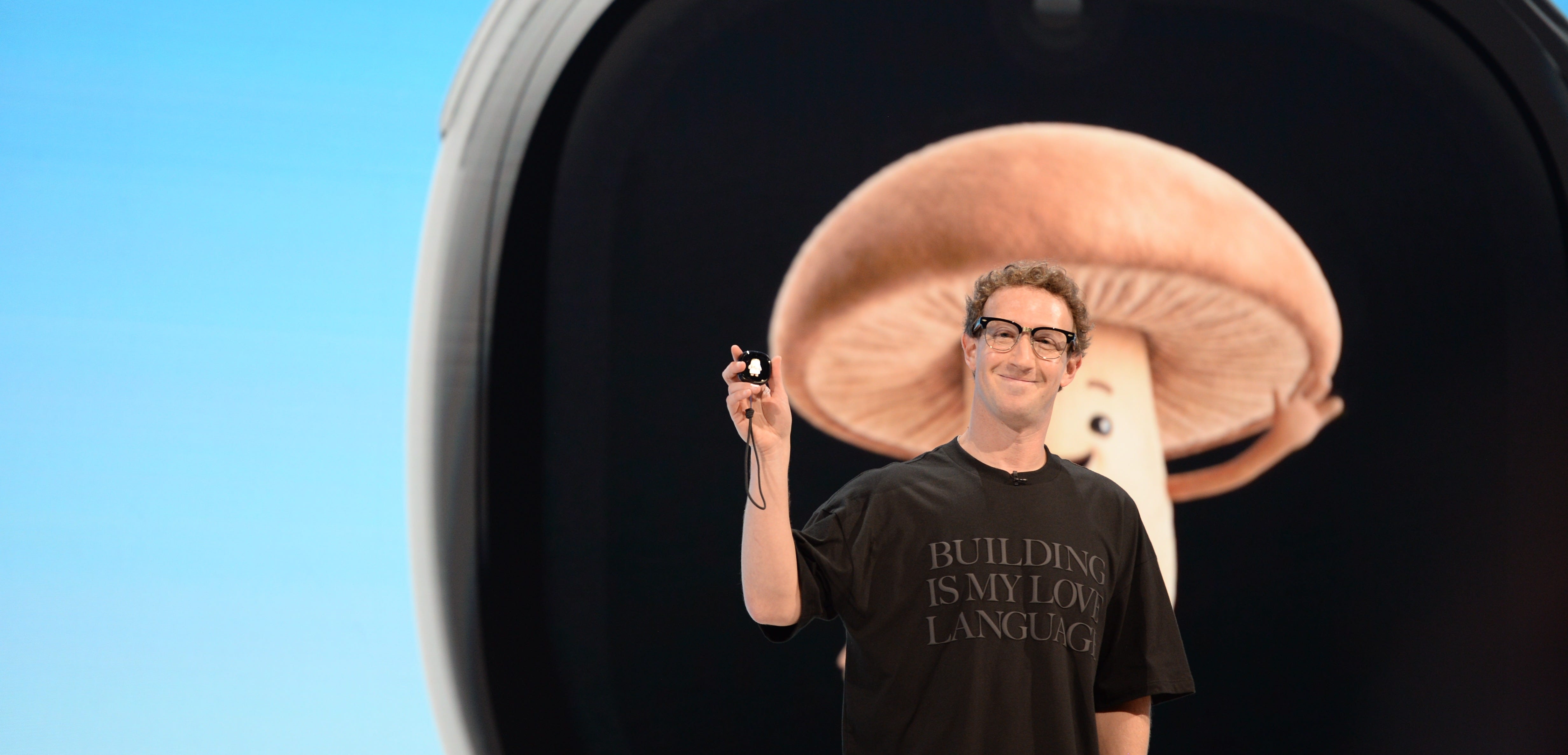
Personal agents have abruptly arrived as mass-market consumer products, led by Meta’s Muse.
They promise to be a godsend, lightening our administrative load in a big way and potentially bringing a welcome shift in the balance of power away from the big platforms and toward individuals. Investors are certainly convinced: startup Instinct, barely done with a round valuing it at $2.5 billion, is now reportedly looking for new money at $10 billion, the competition from Muse be damned.
It’s almost certainly early days for a category that could be the Next Big Thing, with many more entrants to come.
The form factor could grow beyond your cell phone, too — Mark Zuckerberg debuted Meta’s plans for a Tamagotchi-like personal Muse device on Wednesday, dubbed “Muse Charm.” The company is targeting a rollout of the device in time for the holidays.
Partnerships are popping up fast. Shopify CEO Tobi Lütke announced a deal with Muse on Monday to allow the AI assistant to check out across shops on its platform; Shopify stock jumped more than 10% on the news. Its deal likely won’t remain exclusive as Shopify aims to play with all parties, according to a source familiar with the matter.
Yet a lot has to happen for personal agents to become ubiquitous utilities. The truth is, neither the plumbing of online commerce nor its business norms are sufficient to handle an army of bots replacing humans. There will need to be rebuilding, and re-imagining.
Early adopters of Instinct complain that it keeps bugging them to fill out CAPTCHAs — to prove that it’s human. Amazon announced that it would block Muse from shopping on its platform.
Popular restaurants are seeing agents swarm their reservation systems, thanks in part to agent marketing pitches that cite painless restaurant booking as a feature. It’s easy to see the eateries or the reservation platforms simply banning them.
Partnerships won’t be a silver bullet for companies whose business model could be under threat. Travel platform Expedia announced an integration with Muse, but that didn’t stop its stock from sinking, along with its travel booking peers, on fears that it could be disintermediated by an agent army.
Indeed, a new version of the SaaS-pocalypse developed this week as whole categories of companies — dubbed the “consumer inertia” sector — saw their shares tank on the perceived agent threat. Banks, brokerages, and mobile phone carriers were down on the prospect of consumers switching effortlessly for better terms. Third-party services like OpenTable and DoorDash, which could be bypassed, got hit. So did subscription-based media businesses that could be vulnerable to agents rationalizing purchases; New York Times Co. shares are down 15% since late last week.
As with the SaaS-pocalypse, though, this is likely an overreaction; for consumers and businesses alike, software and services can be a lot stickier than they look.
It’s hard to imagine that Amazon, for example, will be able to maintain a policy of “no outside agents allowed” if its customers want to use them. But it intuitively seems reasonable that the company would want to treat humans and agents differently, for technical reasons if nothing else. It’s also intuitive, though maybe less reasonable, that the company will do everything in its power to prevent agents from taking over its relationships with customers.
Will Muse function less well with travel sites other than Expedia? Will it ultimately need them at all if it can access the underlying data via Amadeus and Sabre? If Muse is your agent, will Meta decide which booking service you use? Will that choice be good for the customer?
The questions pile up from there. But it’s exciting to think of the possibility of tools that could extricate us from the tedium created by their predecessors. We’ll certainly be pleased to never again have to pass a Completely Automated Public Turing test to tell Computers and Humans Apart.
Marketing Bites Back
New Dog, Old Tricks? Corgi Insurance Makes a Run
Corgi CEO Nico Laqua is very good at making headlines.
He’s celebrated a seven-days-a-week office culture and said he’d rather die at 50 than live until 80 if it ensured Corgi became a $1 trillion company. The histrionics invited blowback, which was undoubtedly the point.
When Corgi’s head of community was mocked in the New York Post for writing about her romantic non-negotiables on her X account, Laqua posted an extended defense of the company culture on X. Corgi made fresh headlines by buying a San Francisco building from basketball legend Steph Curry, who’d hoped to use it as a headquarters for his business ventures before getting into a tiff with local labor unions. Local real estate pros said the $11 million price was high.
Behind the bravado, though, strains are showing. One of Corgi’s central marketing initiatives is a chain of 24/7 cafés, and it had plans to open hundreds around the world. The company green-lit 16 new leases in San Francisco alone just two weeks ago, according to the San Francisco Business Times, before abruptly sacking the head of café expansion last week. One of the cafés was also shut down for lacking a valid health permit. Though a handful of cafés are in operation in San Francisco and elsewhere, the dramatic expansion appears to be on ice.
The Cute Animal Tradition
Corgi purports to be a new kind of insurance company, and Head of Underwriting Josh Shih told us the company’s ambition is to build a financial infrastructure company. It has more than doubled its value from $1.3 billion to $3.4 billion since January, according to PitchBook.
But in many ways it’s running a traditional playbook. Anna Martin, who works in European partnerships for Corgi, describes the company’s value as providing “normal insurance to the same audience at a different pace.” In an industry as old and strait-laced as insurance, delivering faster can be enough.
The marketing flash is also a long-standing industry staple. The GEICO Gecko was all but ubiquitous for years; celebrity-studded advertising comedy skits are a staple for the likes of Allstate and State Farm. It’s one of the only ways to stand out when selling a generic product that most people use rarely.
As Corgi expands into reinsurance, trucking, liquor, and real estate insurance, the firm seems to have recognized that an edgy social media presence might not be a trust-builder in specialty businesses.
Mario Conde, a partner at Bain & Company, told us that complex commercial insurance markets like cyber liability revolve around specialist individual underwriters. It’s unclear whether Laqua will be able to attract this talent from an industry he described as being “run on fax machines and with boomers.”
Erika Lee, Corgi’s head of brand, has a simple response to those concerns. The company hires an industry veteran to lead each new vertical, and “some of these executives have been underwriting longer than other staff members have been alive.”
Newcomer Podcast
Josh Elman on Apple, AI Agents & Why Startups Can Still Win
Two Big Charts
From Newcomer’s VC Sentiment Report: Founders Fund and Conviction Top Investors’ Fund Wish Lists
This week, we launched Newcomer’s VC Sentiment Report, the first installment in a quarterly, in-depth study of the state of the startup ecosystem based on interviews with 25 leading venture capitalists. Our team conducted 30- to 45-minute video interviews with top Silicon Valley investors — ranging from partners at large multi-stage VC firms to those who’ve gone on to raise their own funds — who were granted anonymity to speak freely. In addition to our qualitative and quantitative data, we have 344 unfiltered quotes from our interviewees.
Here’s a preview of two of our findings from behind the paywall:
We asked our panelists to tell us the multi-stage firm and emerging venture fund they’d invest in outside of their own. For established VCs, Founders Fund was the clear pick with nine mentions. Investors cited the firm’s contrarian strategy as a winner. “They’re kind of back to taking these huge swings on moonshot-oriented companies. They’re pretty fucking good at nailing those, at getting one to really work,” one confidant told us.
Sequoia came in second with six votes, though some of those votes were grudging, given how obvious a pick it is.

For emerging managers, Conviction was the runaway hit with 12 votes — no other fund got more than 2.

Become a paying subscriber to Newcomer to read the full report here.
Five Notable Deals
Snorkel AI, Cyera, Tekever, Enveda, Rightway
Lightspeed backed two big rounds this week — one in AI training and one in AI drug discovery.